Owning an anvil isn’t something most suburban homeowners ever anticipate—much less their significant others. There’s no practical modern need to “forge medieval tools,” yet it’s hard to argue with a piece of equipment that has already outlived several generations of perfectly sensible purchases.
I’ve inherited several tools over the years, ranging from everyday hammers and wrenches to two very serious pieces of equipment: a giant anvil and a kick vise. Both belonged to my great-grandpa, Andrew Verlo, a farmer and profound hobbiest in northern Iowa who was known for tinkering with just about anything.
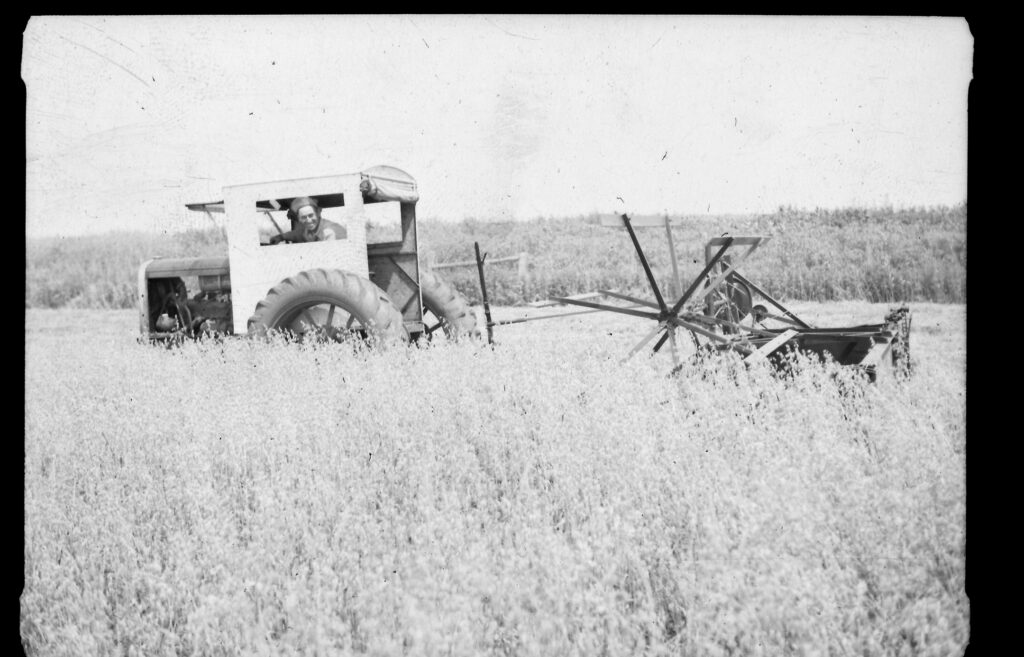



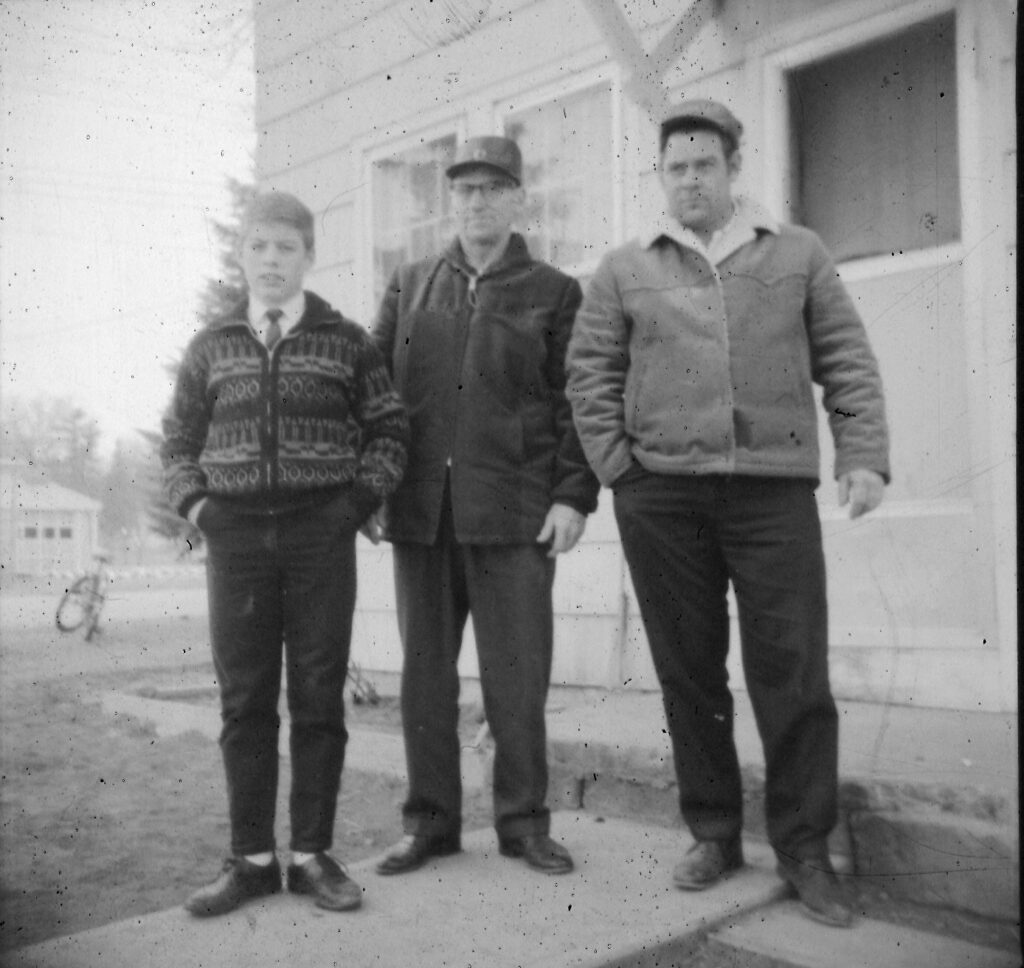
Andrew wasn’t afraid to innovate and experiment. He once took an old Jeep and turned it into a tractor, built many of his own woodworking tools, and even took up aviation later in life — learning to fly for fun at the age of 50.

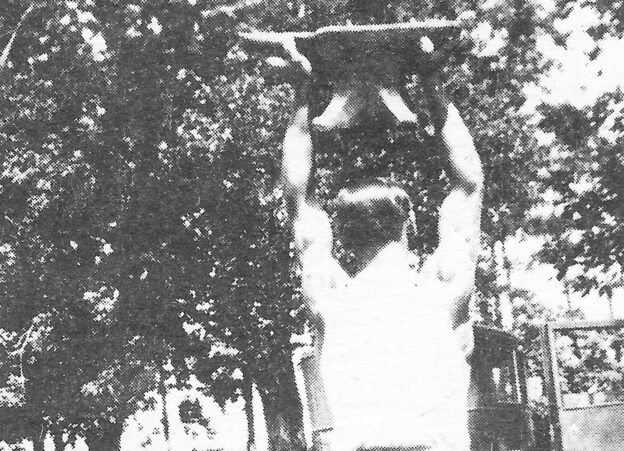
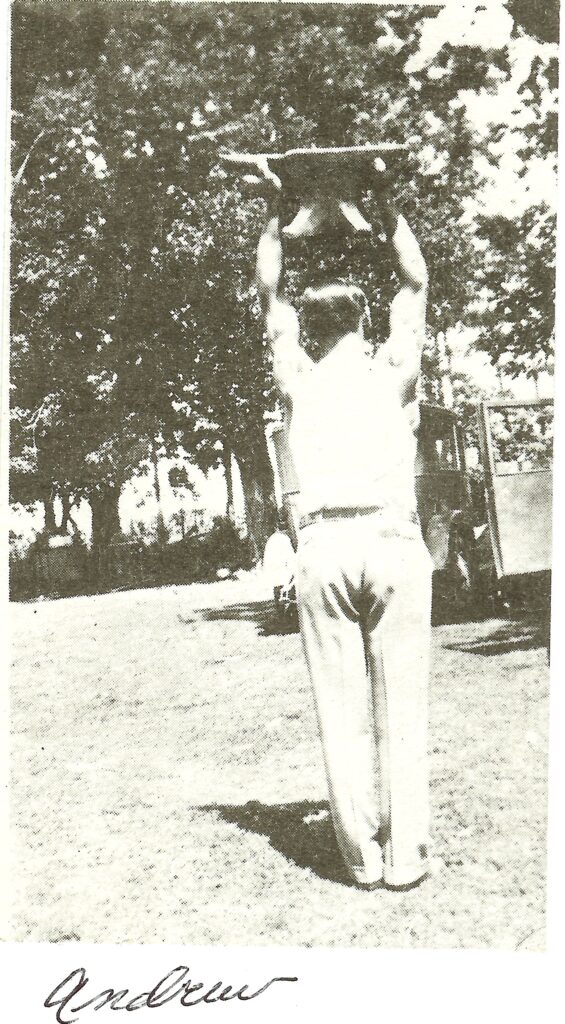
I’m sure Andrew had many important uses for the anvil, such as sharpening tools, repairing machinery or fabricating parts. I’m not so sure about this photo below. I guess it was a 1940s “feat of strength.”
The anvil came into my possession a few years ago when my Aunt LaVaune, Andrew’s daughter, gave it to me. It was at the same time she gave me his antique steam whistle.
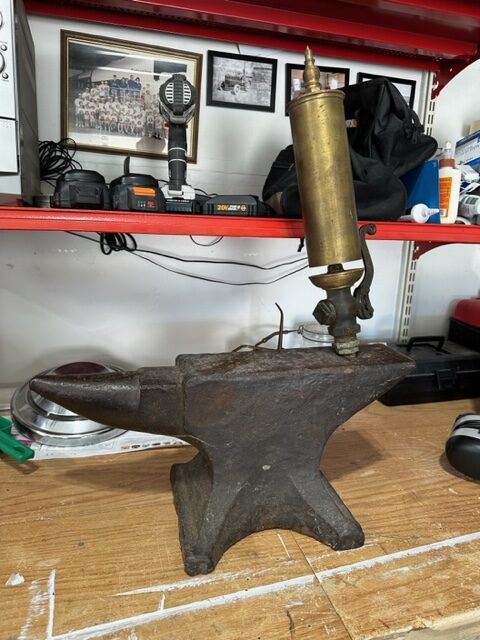
Anvils are fantastic tools — but they’re not exactly convenient. I wanted the anvil to live in one place, yet still be easy to move when I needed it and tuck away when I didn’t. I also inherited another heavy piece from Andrew: a kick vise that tips the scales at well over 100 pounds.
If I was going to use these tools regularly, I needed a better solution than Andrew’s strategy of lifting it over his head.
A Little History on the Anvil
The anvil itself is a Peter Wright, stamped with the numbers 1-0-3. Those numbers aren’t random — they indicate the weight using the old British hundredweight system:
- 1 hundredweight = 112 pounds
- 0 quarter-hundredweights = 0 pounds
- 3 additional pounds
That puts the anvil at 115 pounds.
After a bit of research, I learned it was made in Dudley, England, likely in the late 1800s or early 1900s. Knowing that made me appreciate it even more. This wasn’t just a tool — it was a piece of history that had already lived a long, useful life before it ever made its way to our family.
Building the Cart
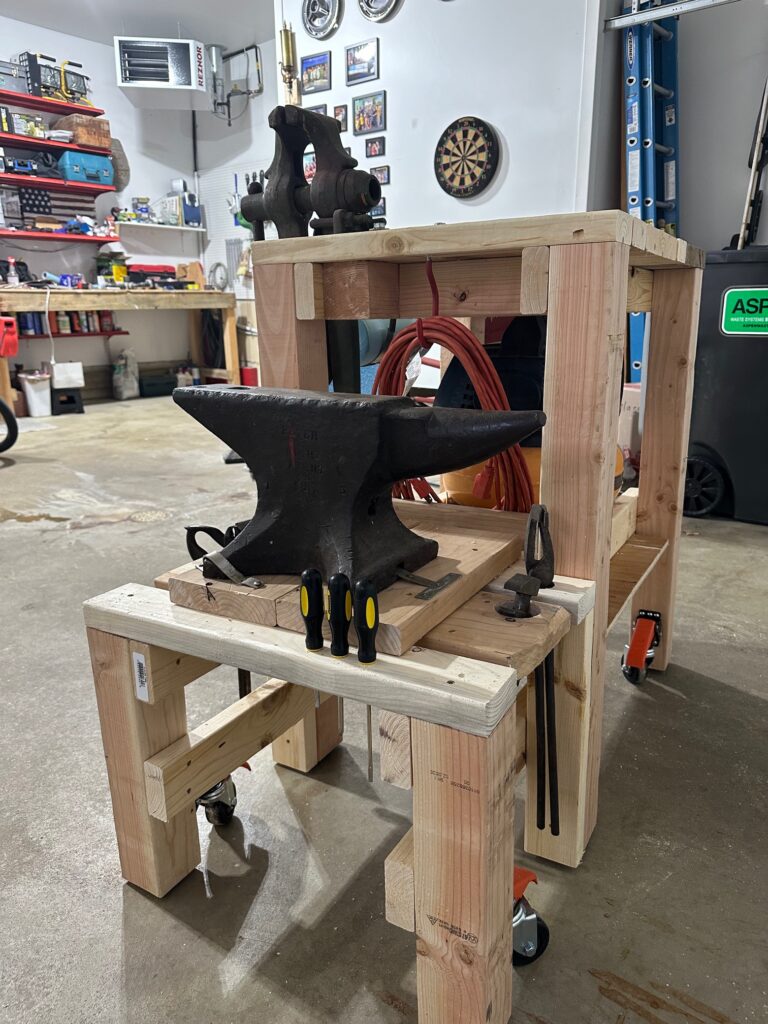
To make everything practical, I decided to build a rolling cart that could hold both the anvil and the kick vise. I sketched out a simple plan on paper, then headed to Menards with a shopping list that included 4x4s, 2x4s, 2x8s, screws, and carriage bolts.
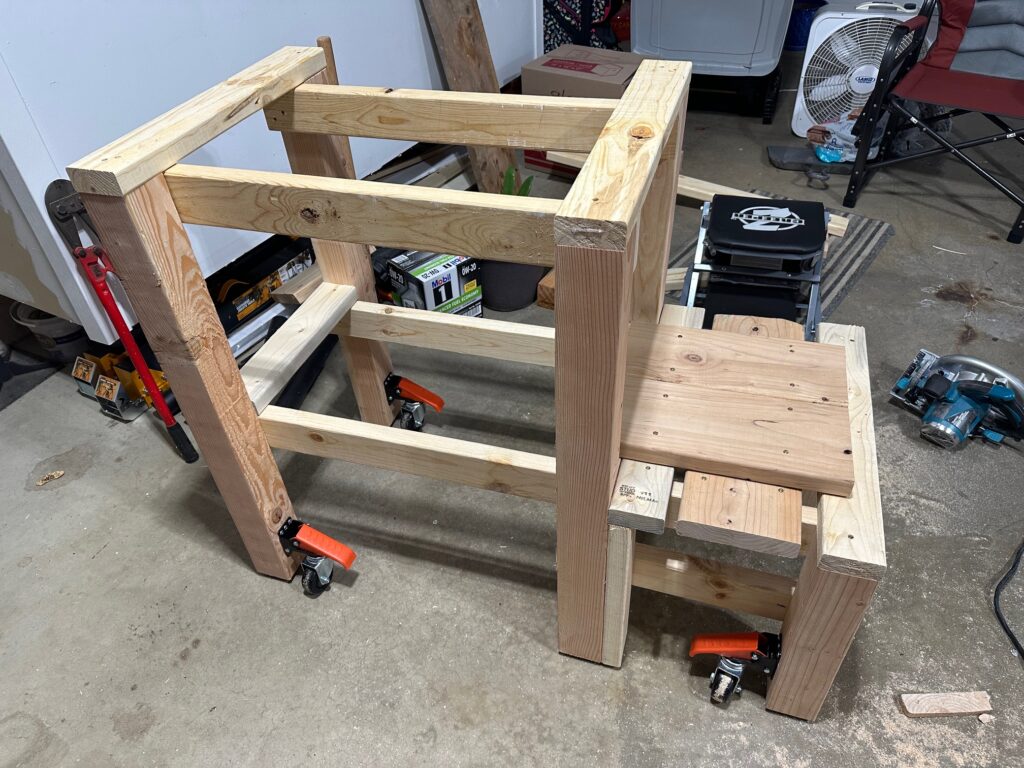
I ordered a set of heavy-duty retractable caster wheels online. When I’m using the anvil, the wheels lift off the ground so the cart sits solidly on the floor. That keeps everything stable while hammering and prevents damage to the caster bearings.
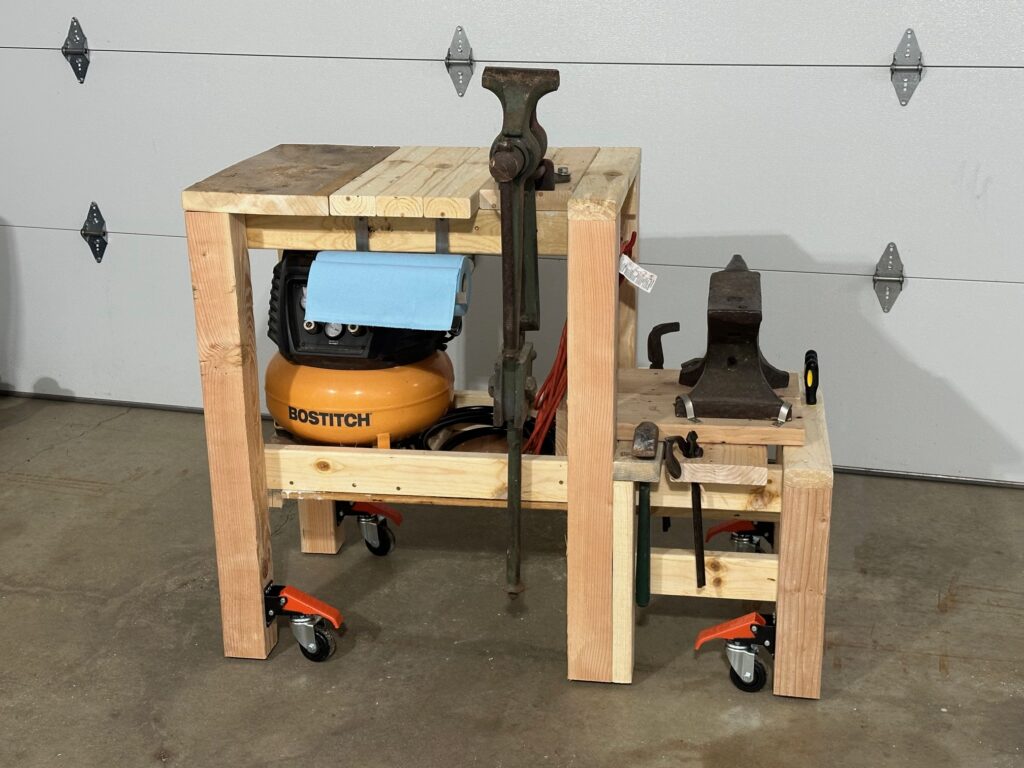
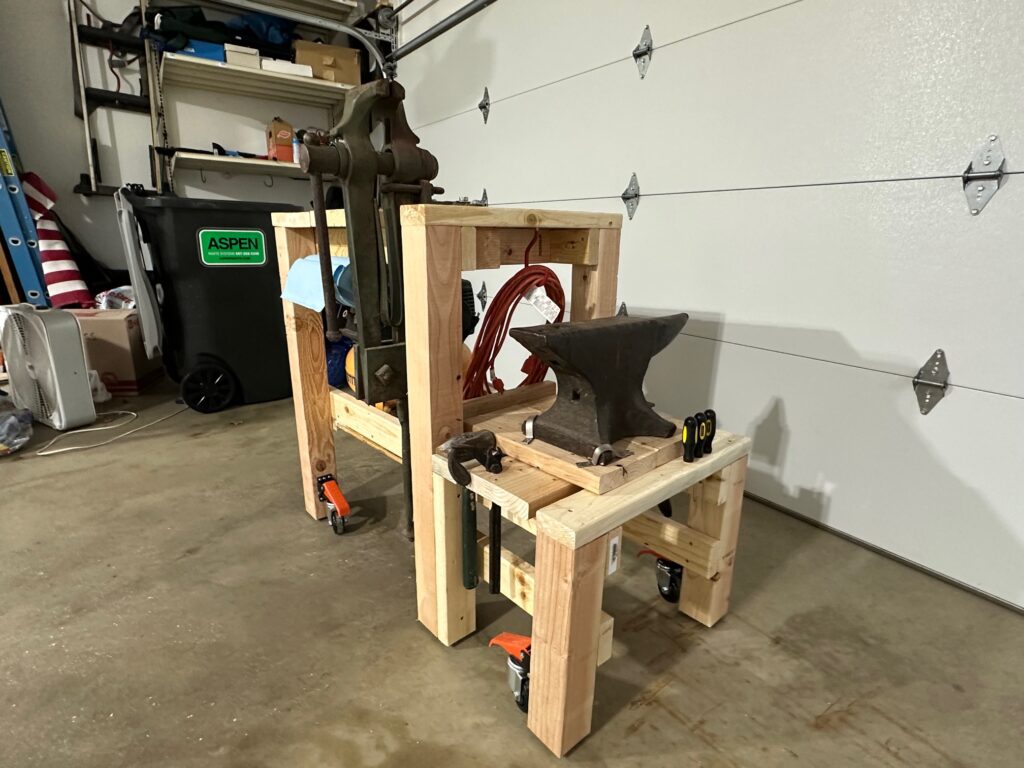
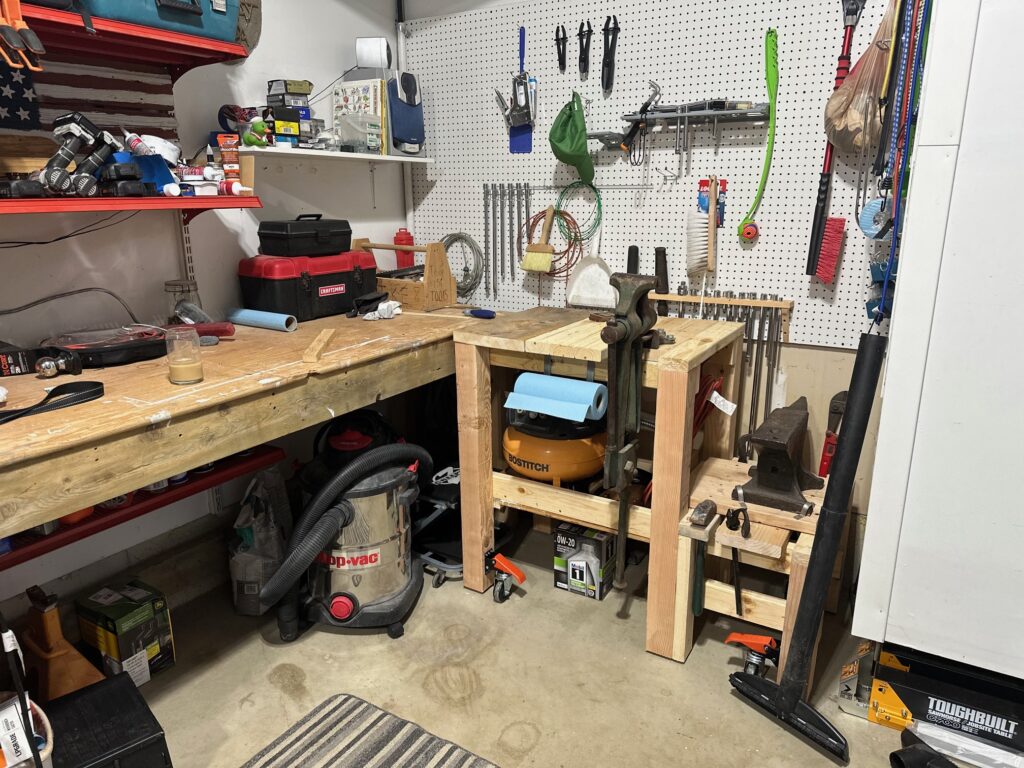
Mounting the anvil gave me a chance to reuse some old materials. I found scrap steel from the old garden planter and used it to secure the corners of the anvil to the base. I built the cart so the top of the anvil was at knuckle height, which I found to be an ideal height for working. I mounted the kick vise on top of the cart, and I added a middle shelf to hold my air compressor. A hook for an extension cord and a few drilled holes for tool storage rounded things out.
How I Use It Now
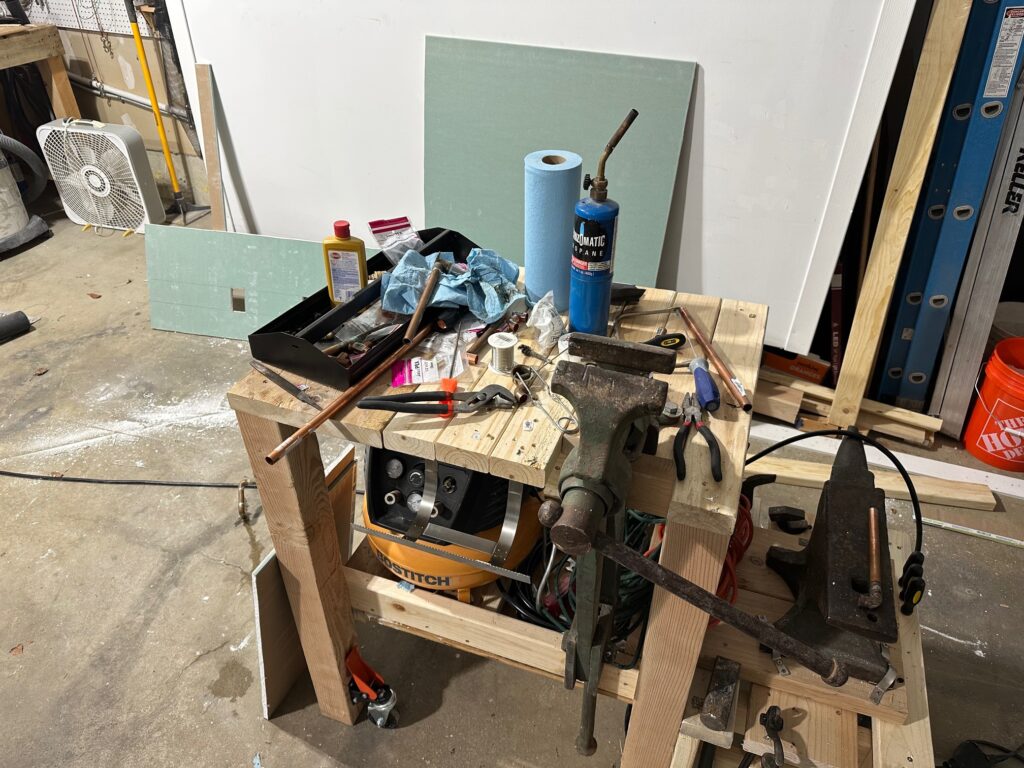
I couldn’t be happier with how it turned out. I use the cart for copper soldering, grinding steel, and anything else that benefits from a solid, movable work surface. When I need space or better airflow, I can roll it to the center of the garage or just outside. When I’m done, it stores neatly in the corner of the shop.
Andrew passed away in 2008, just shy of his 100th birthday. Every time I roll this cart out and put those tools to work, it feels like I’m continuing something he started — keeping his tools useful, not just stored away, as Andrew would have wanted.