A Dinosaur, Christmas Lights, and a Little Overengineering

Several years ago, we added a T-rex inflatable to our Christmas decorations, and it quickly became one of my favorites. There’s just something fun about mixing dinosaurs with the holiday season. Over time, the collection has grown to include a brontosaurus and a stegosaurus as well.
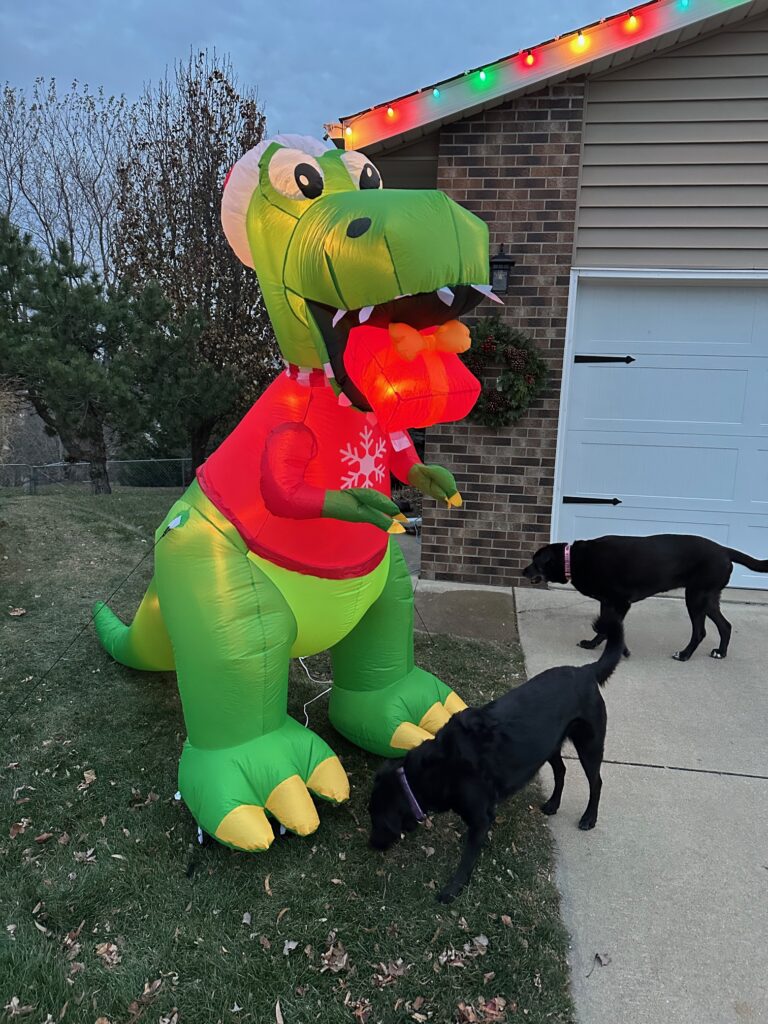
Stella & Winnie investigating the T-rex in 2024

This year, when it came time to set everything up, I discovered the T-rex had a problem: several of the internal lights had burned out. Normally, the easy fix would be to replace the incandescent bulbs inside the inflatable and move on. But after installing LED lighting in our basement bathroom earlier this year, I decided this was a good opportunity to try something different—and learn a bit more in the process.
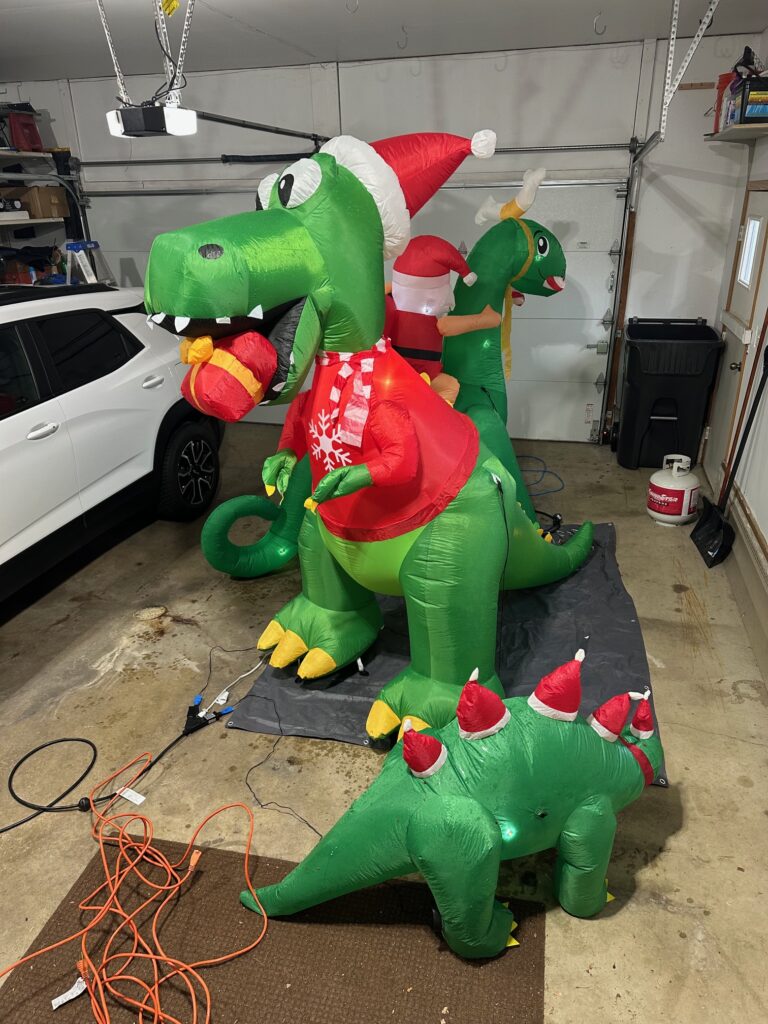
Nothing to see here… just inflating dinosaurs indoors

Instead of replacing the bulbs one-for-one, I decided to convert the dinosaur to LEDs.

Planning the Upgrade

I started by searching online for LED modules that would work well inside an inflatable, along with a compatible LED driver. I settled on a 12-watt (12V, 1A) driver paired with a 20-piece LED strand. While the driver wouldn’t support the entire strand at once, I only planned to use 10 LEDs for this project, with the remaining 10 saved for a future inflatable. Once everything arrived, it was time for what I jokingly call “surgery.”
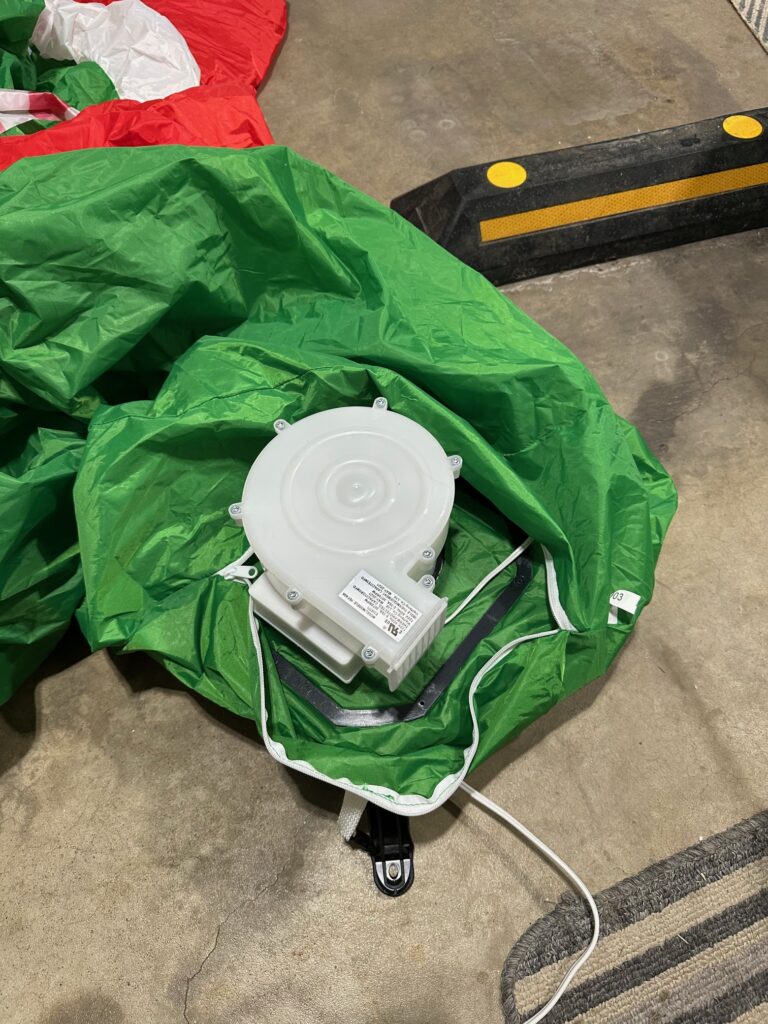
CrackingOpening the T-rex to see what makes it roar

The original lights inside the dinosaur ran directly on 110 volts. I disconnected that line and connected it to a new LED driver, which stepped the voltage down to 12V. From there, I wired the driver to the LED modules, spacing them several feet apart and using 18-gauge wire to make the necessary extensions.
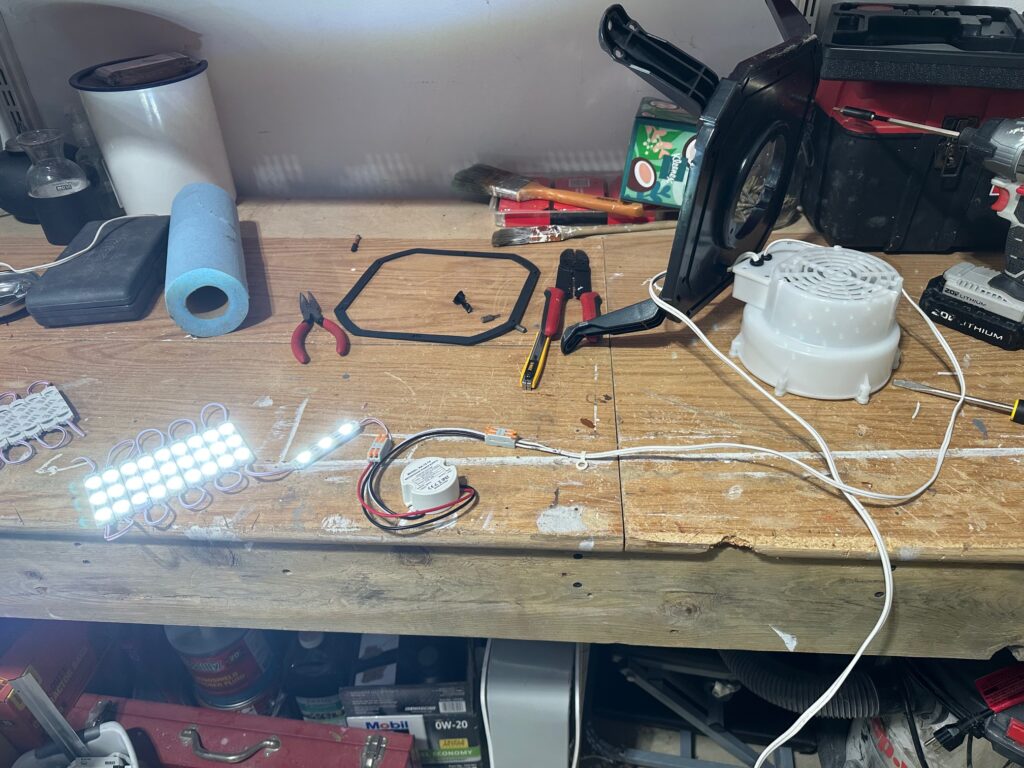
Making sure the lights work before the dinosaur eats them

Since these lights would live outdoors—and because I don’t mind overcomplicating things in the name of practice—I soldered all of the connections and added heat-shrink tubing to each joint. My main concern was wires getting tugged or pulled inside the inflatable over time, and I wanted to minimize the risk of anything coming loose.

Installing the LEDs

In total, I added ten LED arrays inside the dinosaur. Each array consisted of two groups of three LEDs, taped back-to-back so they would shine light in both directions. This replaced the original five incandescent bulbs with five new groupings of six LEDs each.
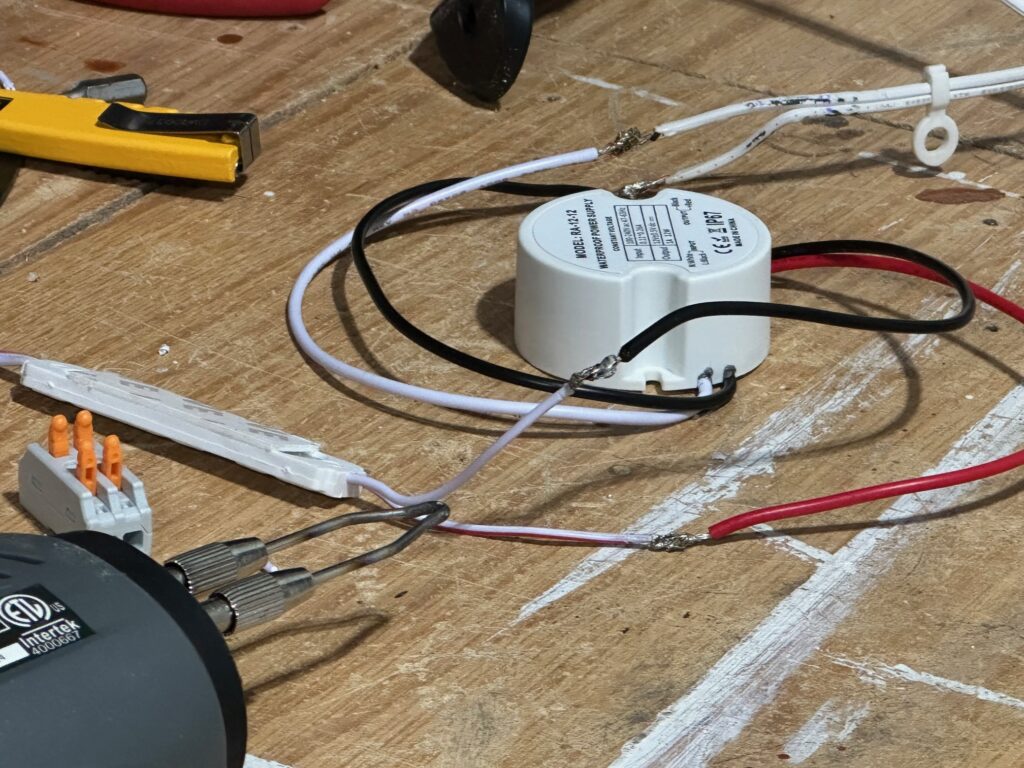
That means the dinosaur now has 30 LEDs instead of just 5 incandescent bulbs.

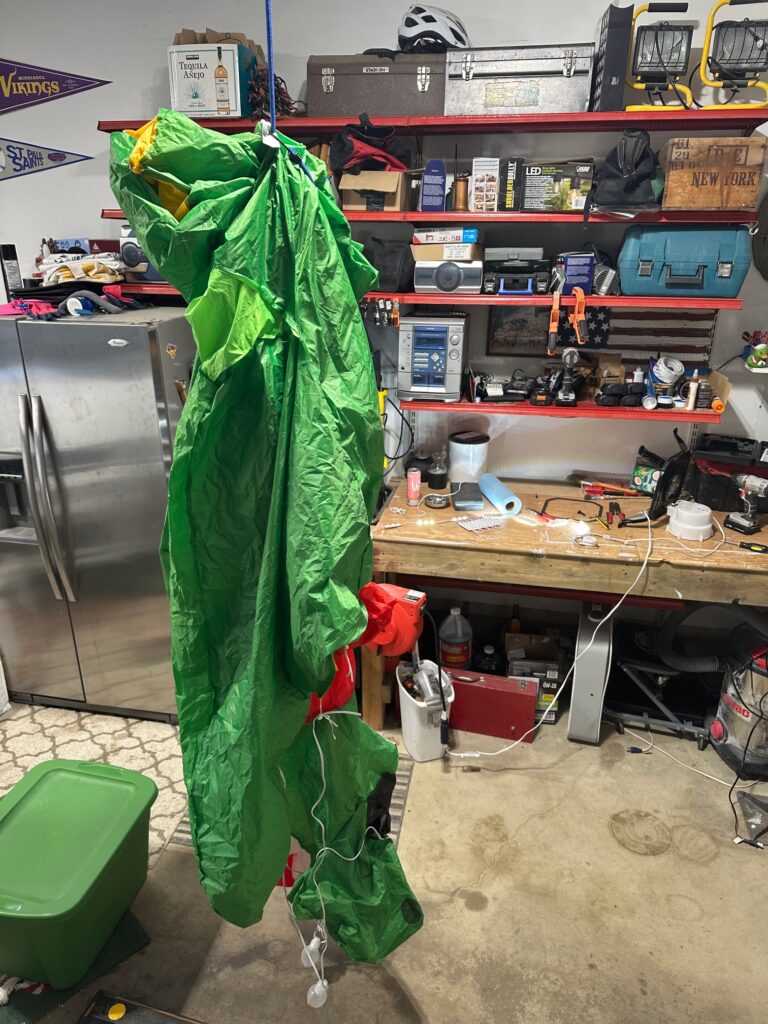
Once everything was wired up, I hung the inflatable from a bungee cord attached to the garage ceiling, flipped it inside-out, and secured the new wiring to the original tie-down points inside the dinosaur. After carefully flipping it back right-side-out, I reattached the fan unit and powered it on.
The Results

Here’s the finished product:
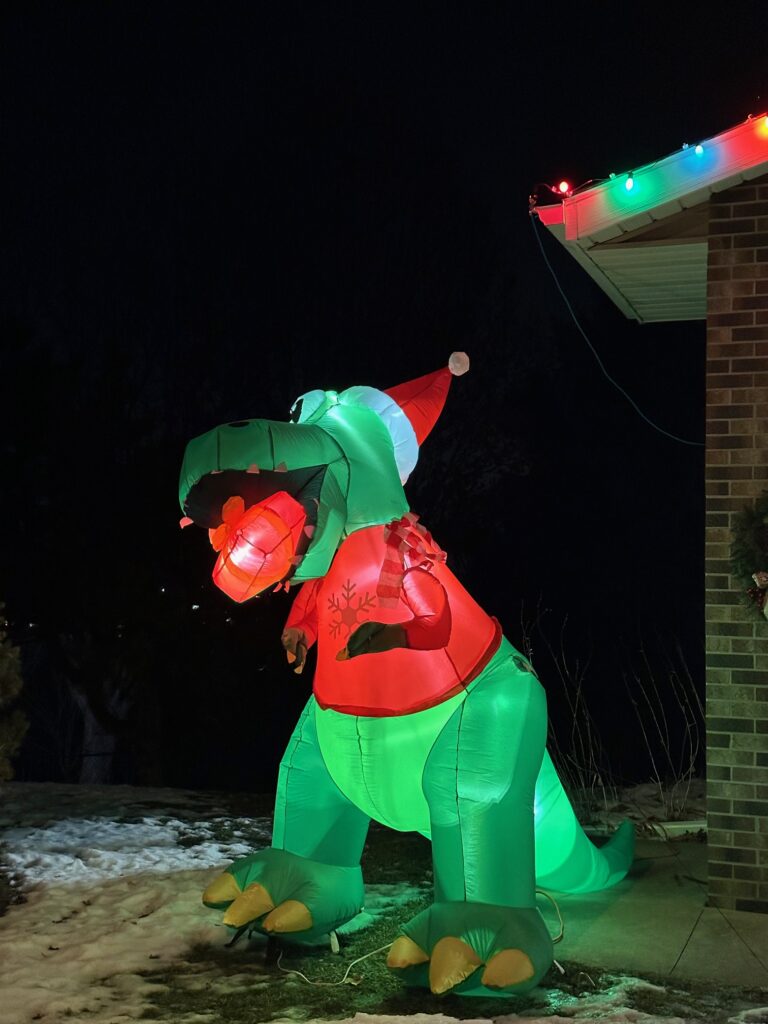
I’m really happy with how it turned out. The light is more even, brighter, and should last much longer than the original bulbs. Was it more expensive than simply replacing the incandescent lights? Absolutely. But the real value for me was the experience—I got hands-on practice soldering wires and more repetition working with LED lighting systems.

And now, our Christmas T-rex is ready for many more holiday seasons.

Parts Used

I ordered all of the components from Amazon:

LED Modules
LED Module Replacement Lights for Inflatables, White, 20 pcs, 5730 SMD, 150LM per module, IP65 waterproof

LED Drivers
MujHoJm Waterproof IP67 LED Driver, 12W, 120V to 12V, 1A

Wire
SPTDACSFP SPT-2 18-Gauge 2-Conductor Lighting Wire, 50 ft
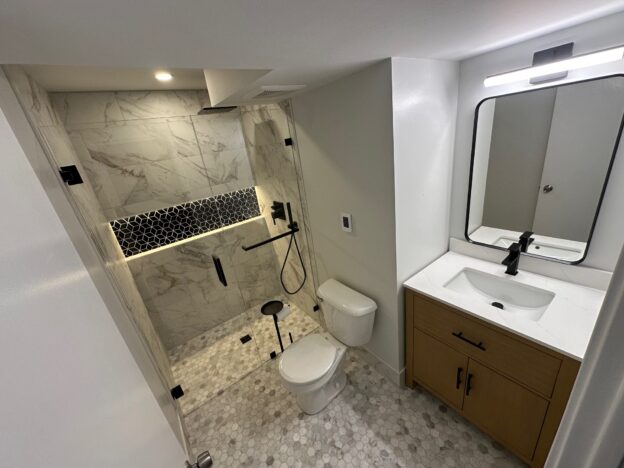
Glass Shower Door and Vanity in the Basement Bathroom

With the tiles finally in place, it was time to move on to the finishing touches of our bathroom renovation! One of the trickiest parts turned out to be choosing the right vanity. We knew we wanted a white countertop and initially thought a black vanity base would create a nice contrast with the black tiles in the shower niche.

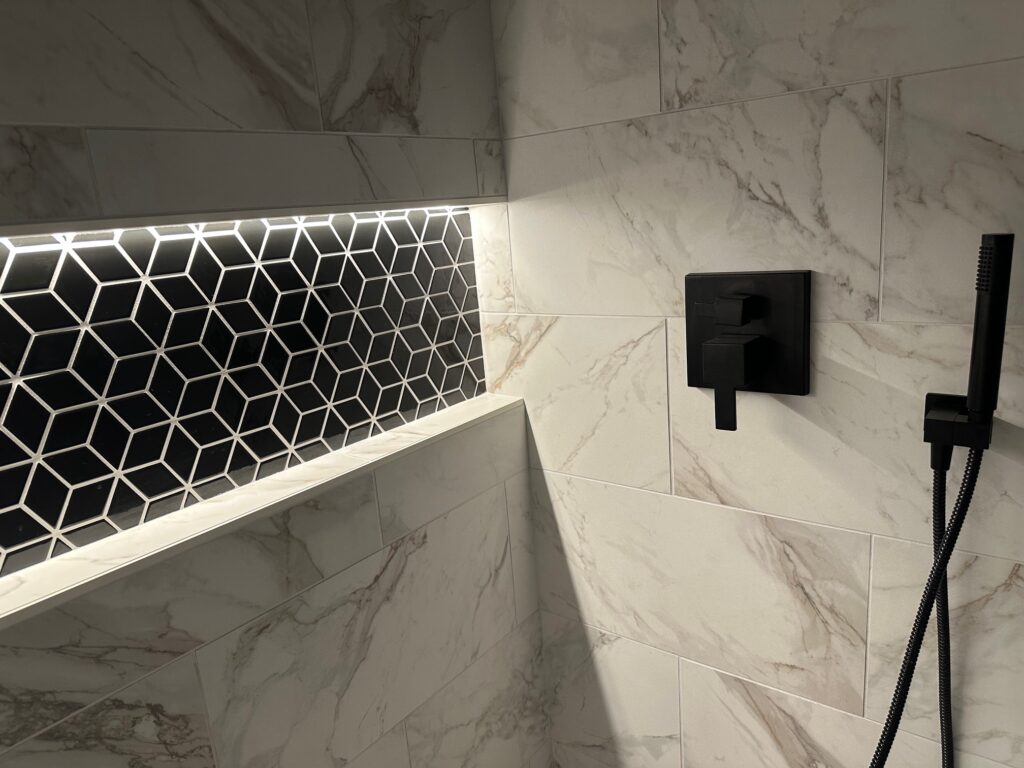
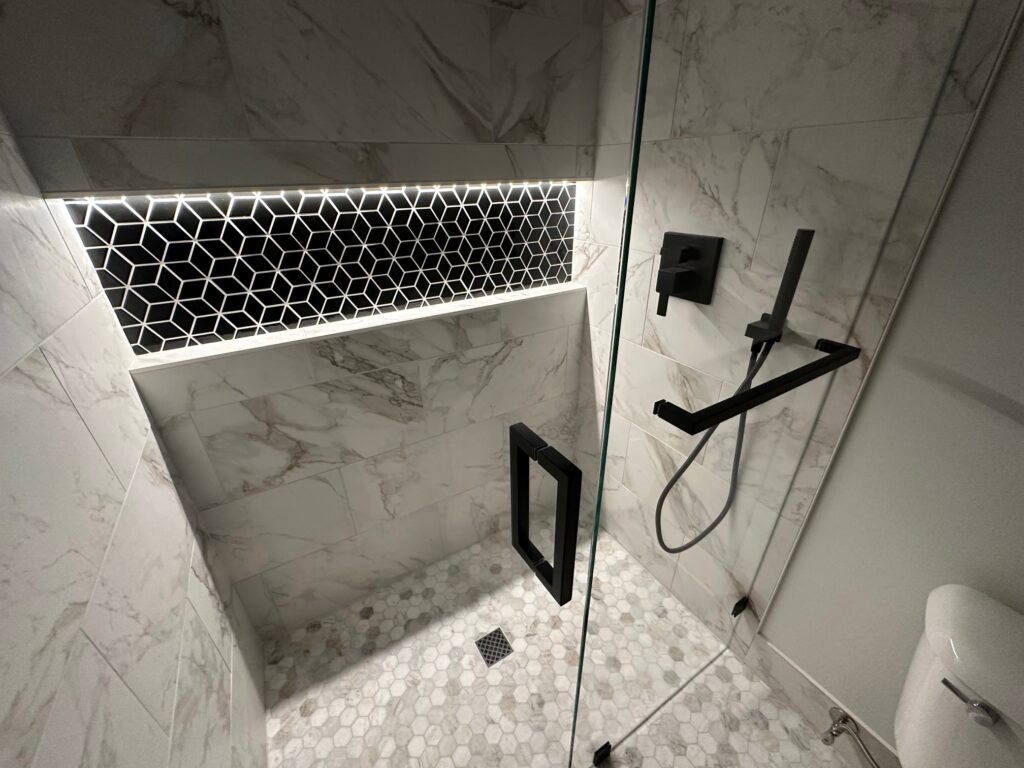
The finished shower niche with black mosaic tiles

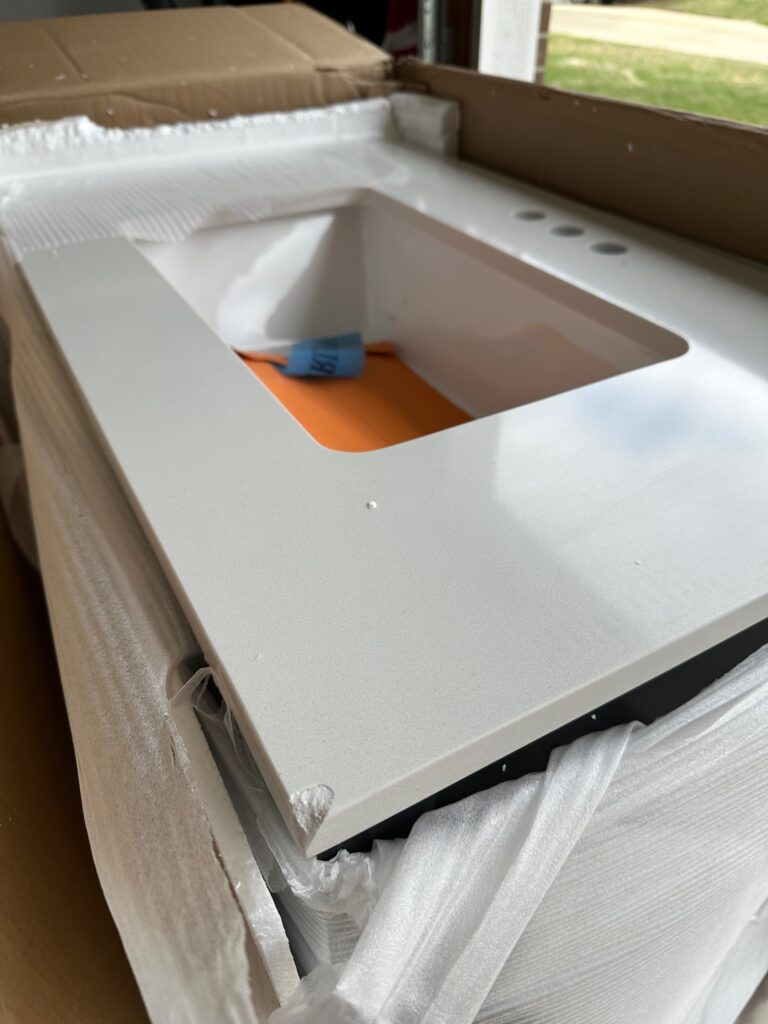
But after two separate vanities arrived damaged, we took it as a sign to rethink our plan. Luckily, both were returnable—and in the end, it all worked out for the best.

One of the two vanities that arrived broken

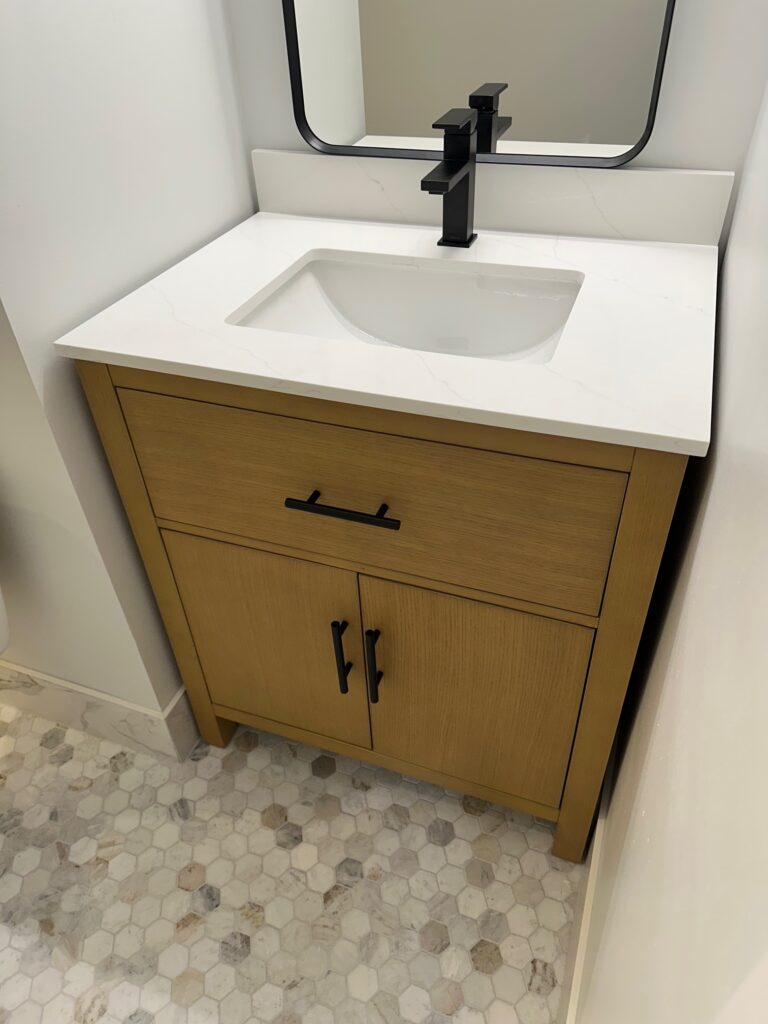
We found the perfect option at Costco: a vanity that fit our 32″ space perfectly. It has a sleek white countertop, came with a backsplash, and we love that it’s free-standing—it really gives us every chance to showcase our marble tile flooring.

The Vanity is from Kohler. It also offers plenty of storage inside and, best of all, has a single hole on top, which let us install the faucet we had our eye on.

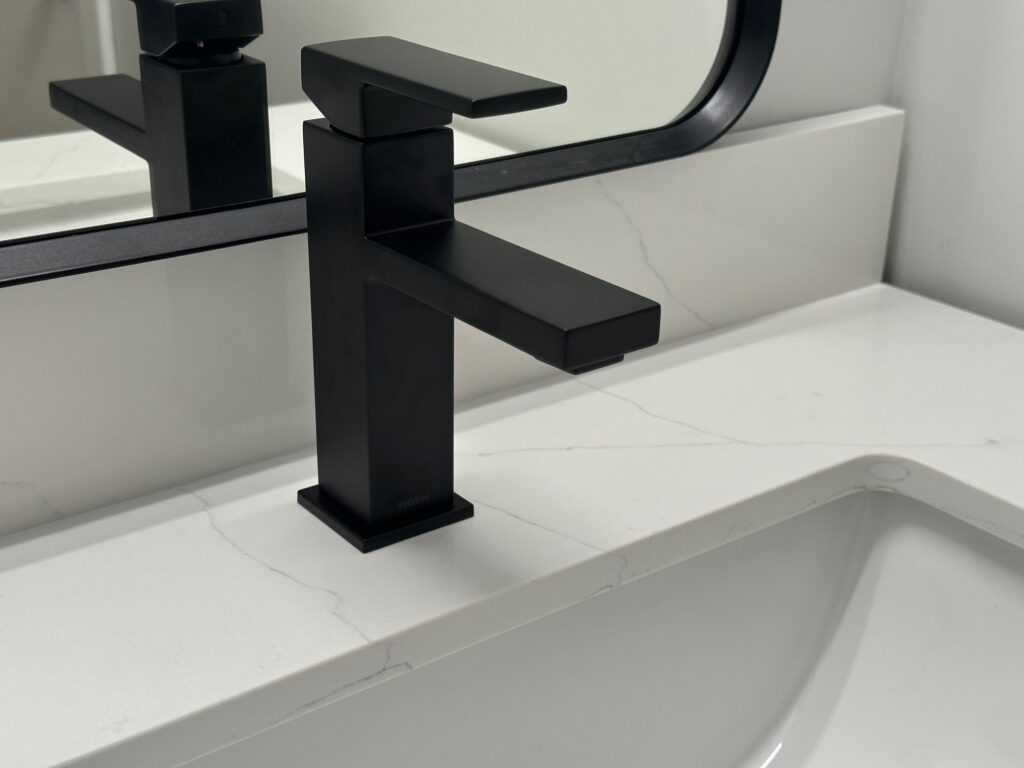
The sink faucet is from Moen (Revyl Matte Black).

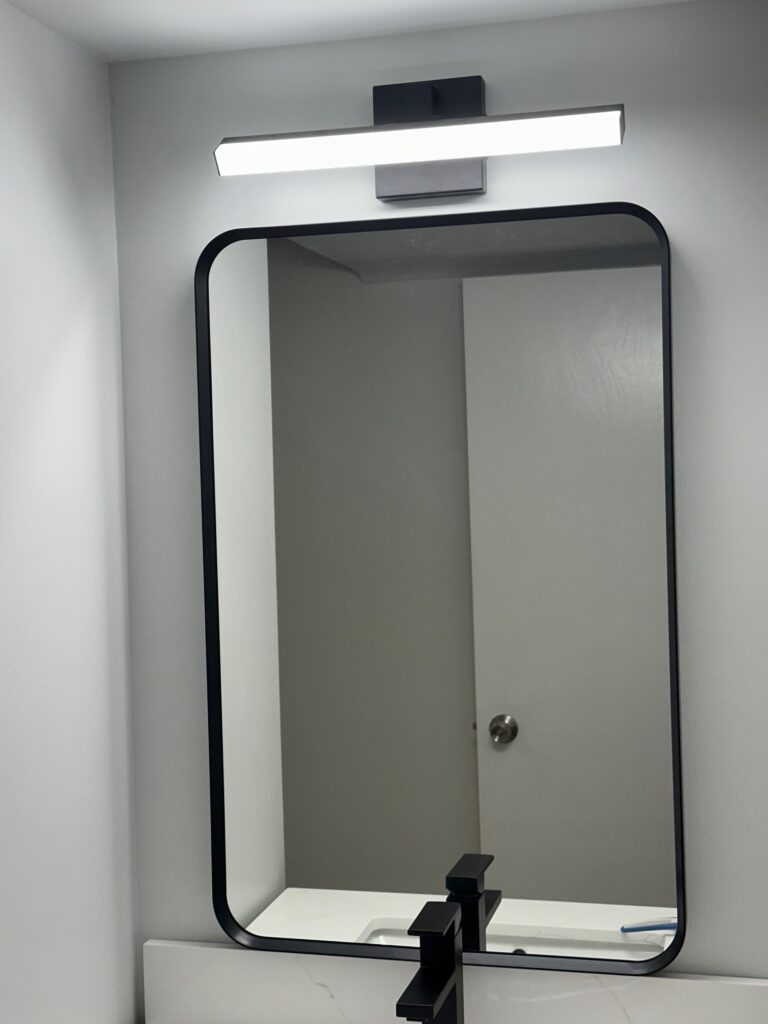
Costco really came through for us during this project—it ended up being our go-to spot for finding pieces we loved. That’s where we found the Kohler mirror, which looks great above the vanity. The light fixture came from Menard’s, and while we’re not 100% sold on it yet, it complements the modern-style of the space.

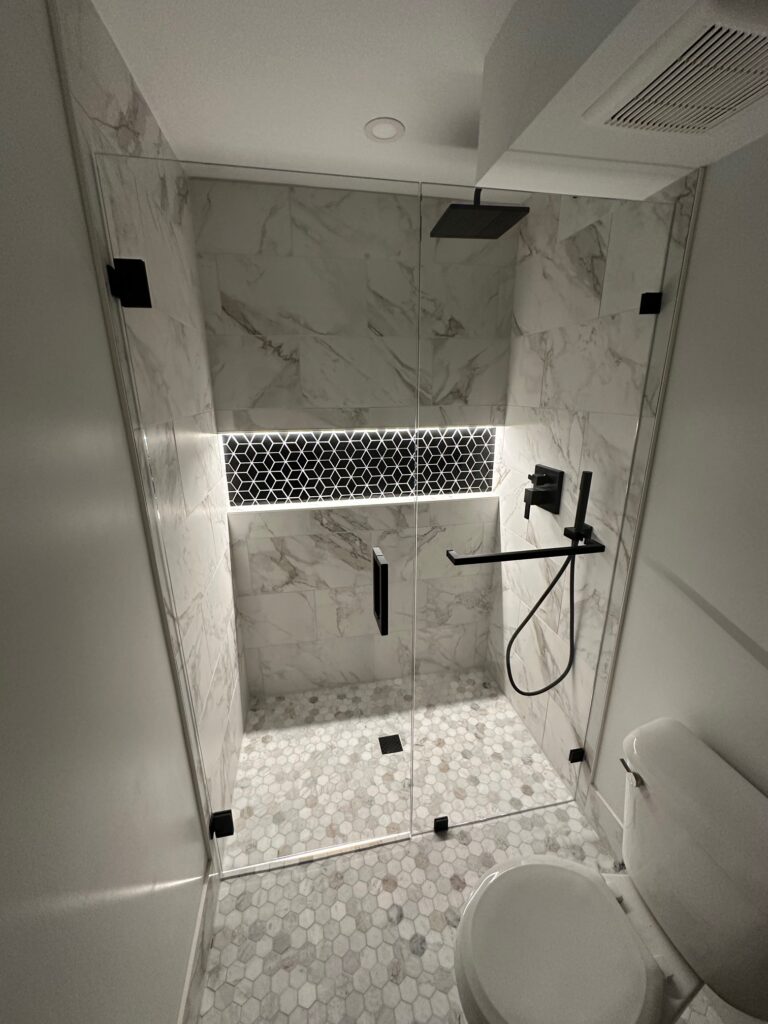
Choosing a shower door turned out to be more complicated than we expected. With the toilet so close to the shower, we assumed a sliding door would be our only option. But with a non-standard 54″ opening, finding something off the shelf proved tricky. I also wasn’t thrilled about a sliding door—mainly because of the extra effort it takes to keep clean and all the little spots where water can collect.

On the advice of Sara’s parents, we reached out to a few local glass experts to see what custom solutions might be available. The team at K&M Glass in Rochester was incredibly helpful. They suggested a fixed glass pane as a clean, simple, and budget-friendly option. After measuring our space, they walked us through different styles and materials.

Since we have so much white tile in the bathroom, we chose a type of glass called Starphire—it’s ultra-clear and doesn’t have the greenish tint that standard glass can sometimes have. That small detail made a big difference in keeping the tile color true. The glass arrived in just a few weeks, and installation took less than two hours. We’re really happy with how it turned out.

Staying true to the style of the Kohler shower system, the hardware for the shower door is also square and matte black.

Finally, it’s time for the long-awaited before-and-after comparison of this bathroom!

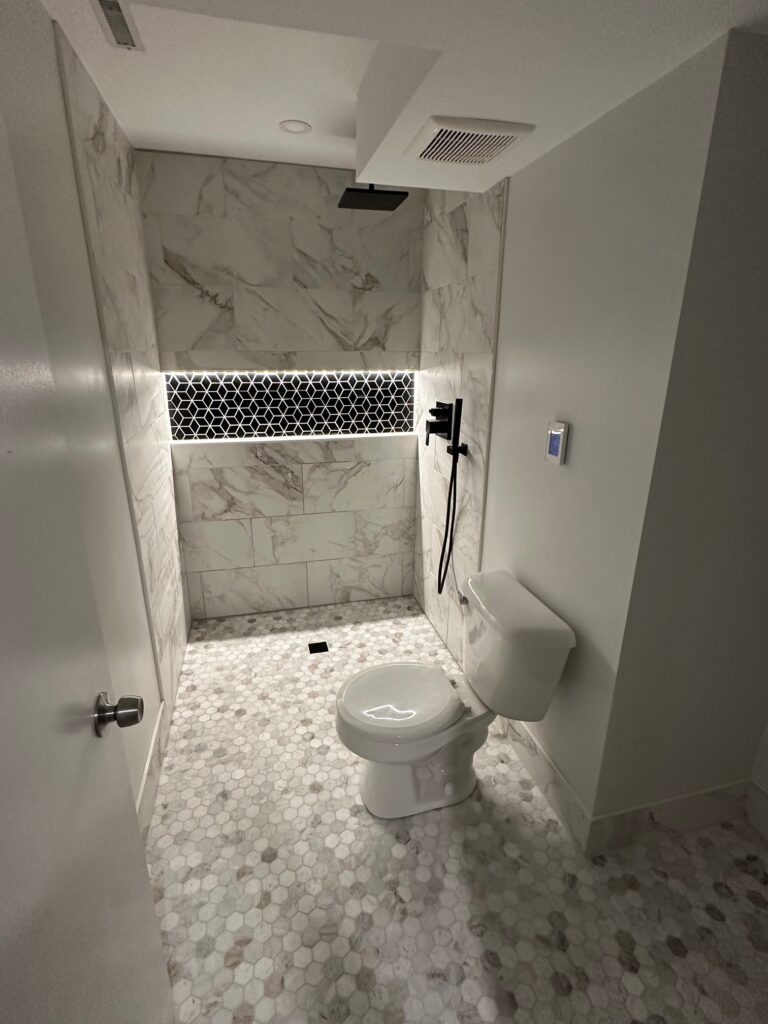
This renovation is, without a doubt, the best one we’ve tackled so far. The bathroom now features heated floors, a zero-entry luxury shower, and soft ambient lighting that gives the whole space a spa-like feel.

It’s a dramatic upgrade from the original 90s builder-grade setup, which had a shower half the size of the one we have now. The transformation has made the space not just more functional, but also way more enjoyable to use every day.

Thanks for reading!
-Mike