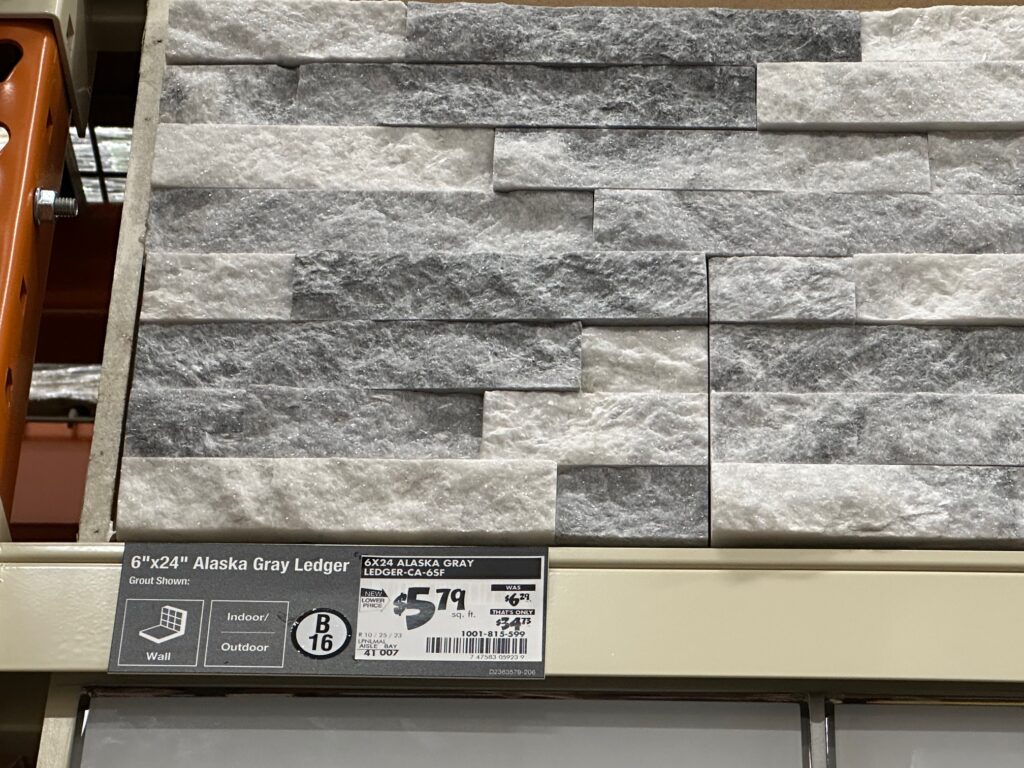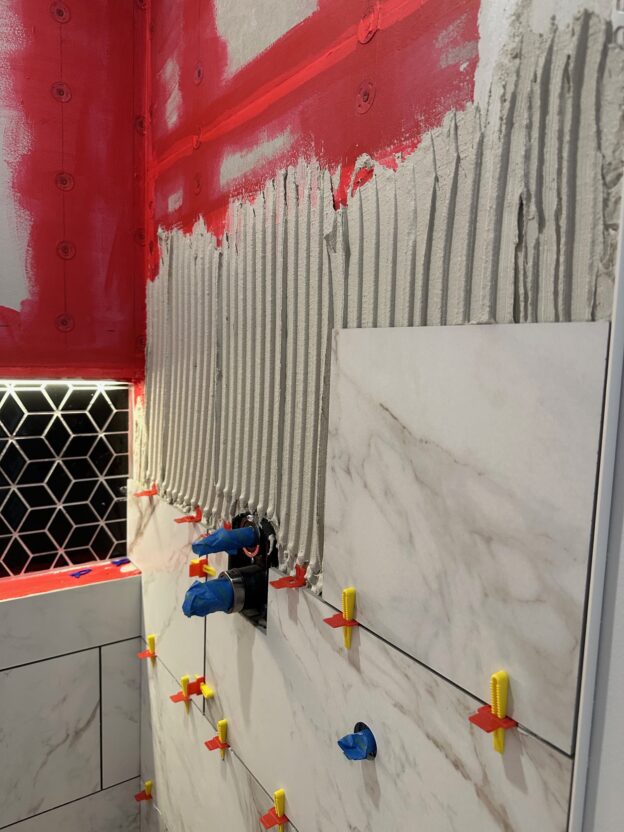
Renovation projects can feel endless at first, especially with the way I approach them. Each step of the process can take days or weeks, since I am only able to work on them during my spare time. In this renovation, the demolition and foundation work alone took several weeks. Then, there was all the thought that needed to go into how to perfectly execute a heated floor, barrierless shower entry, expanded shower footprint and other improvements. I intentionally slowed the pace of this project so I didn’t accidentally skip a necessary step. The lengthy start of this project made choosing tile an exciting milestone. It meant we had passed the boring stuff and had begun to make the actual upgrades. Here’s the tile we chose:
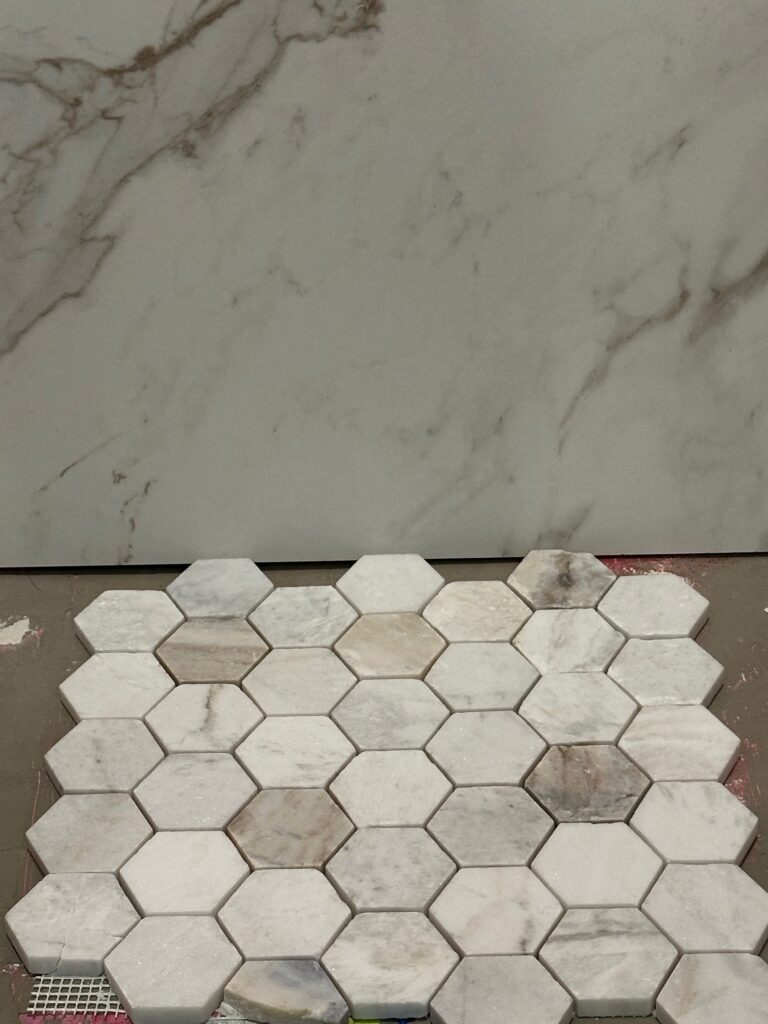
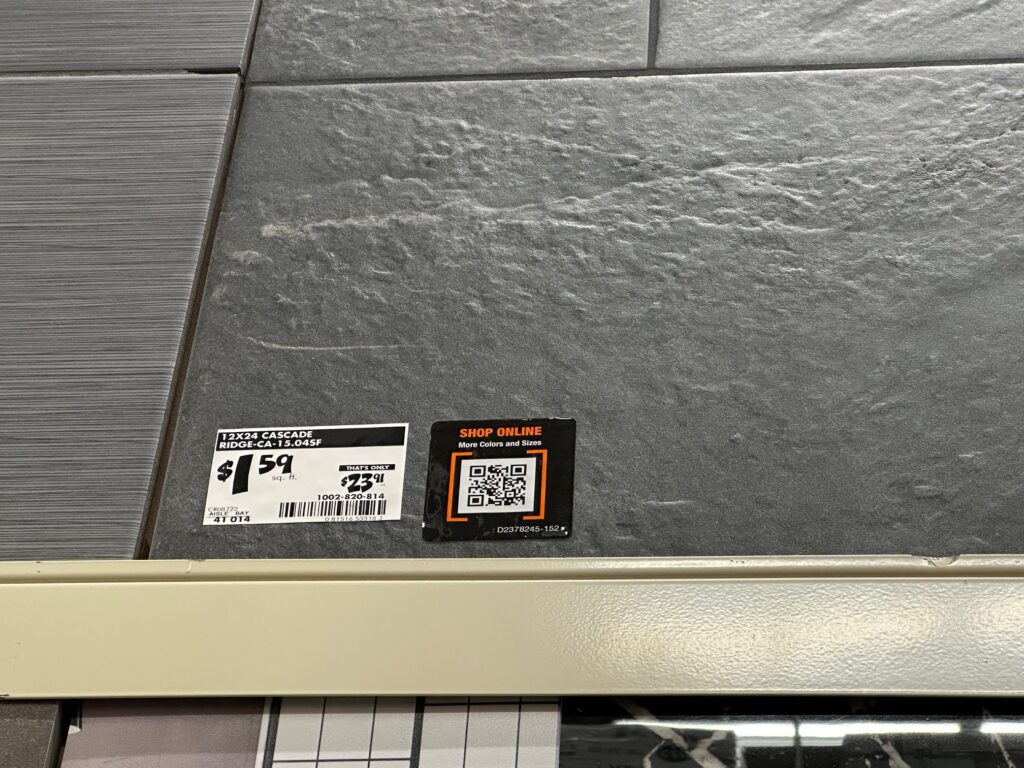
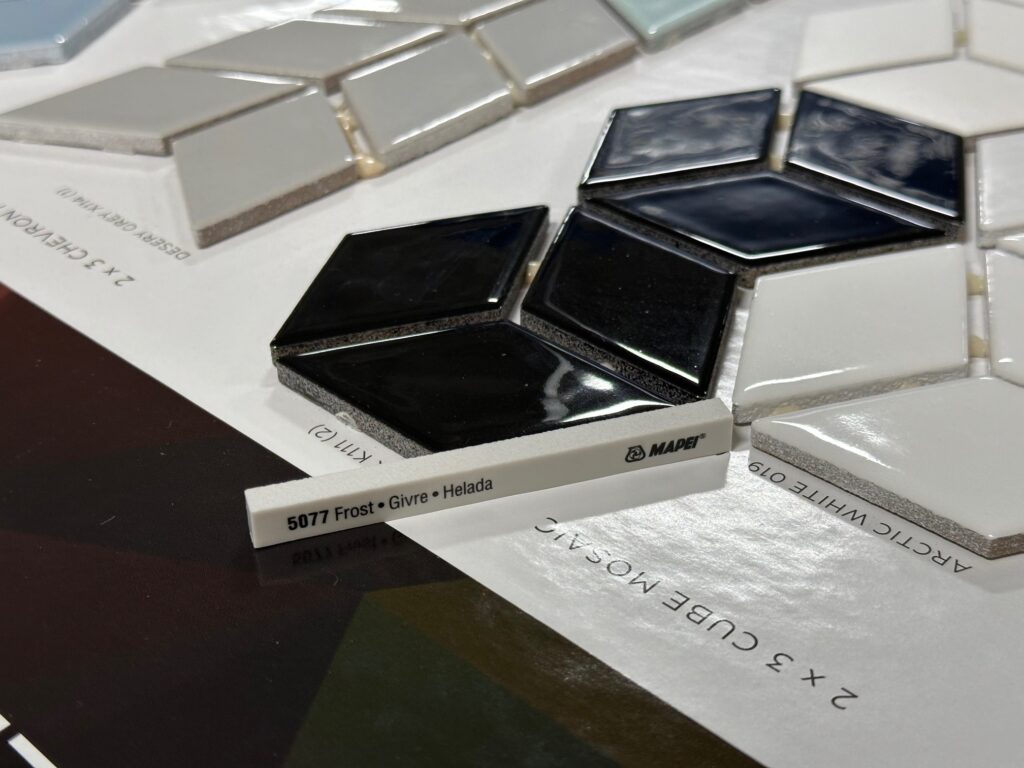
You may notice a theme with the tiles… We knew we wanted something bright for the space because the bathroom doesn’t have any windows to let in natural light. However, since there would be so much white in the room, we also wanted to offset it. That’s why we chose this black accent for the shower niche:
For this project, I decided to finally invest in a wet tile saw. I did this after realizing my normal method of cutting tiles, with an angle grinder, would struggle to rip 24 inch tiles in half in a clean manner. The angle grinder had worked fine for me in the first bathroom and second bathroom remodel, along with several other small projects in our first house. However, cutting tile without water creates a ton of dust and I knew I needed to make a lot of precision cuts in this bathroom. Also, as noted earlier, my slower pace would not make it financially feasible to rent a saw. I decided to buy this Ridgid Wet Saw from The Home Depot.
I started with the floor, carefully placing tiles around the drain and using a laser level to guide a straight line out the door. I’d never used a laser level before. I was really happy with the Bosch one that I picked up.
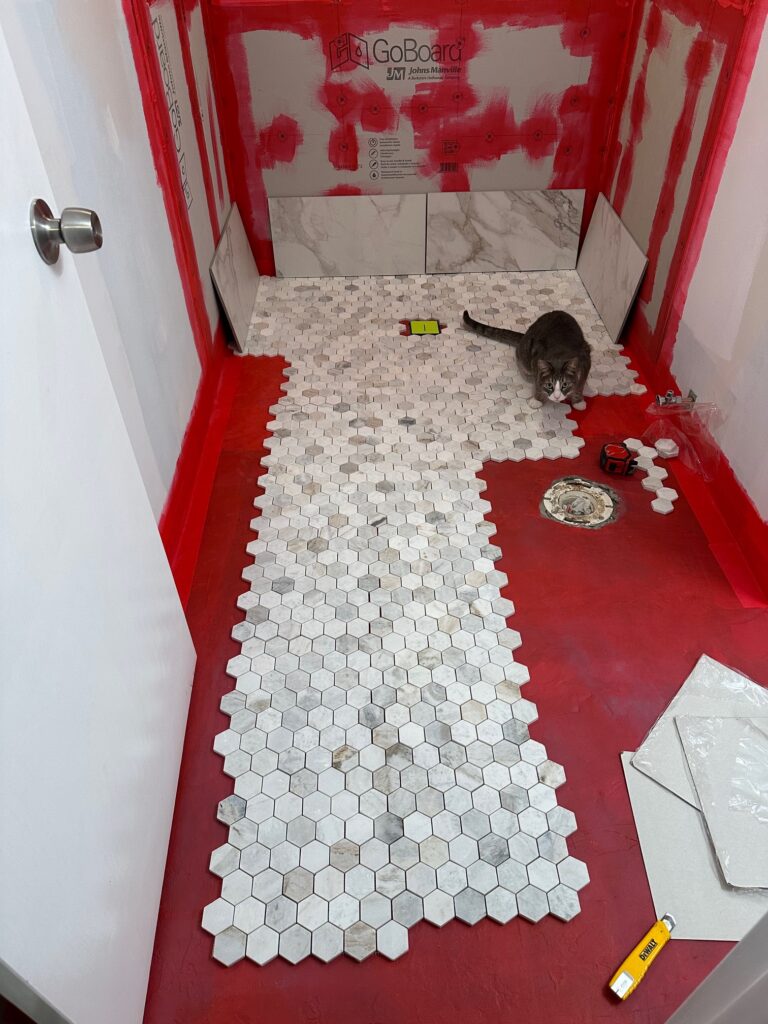
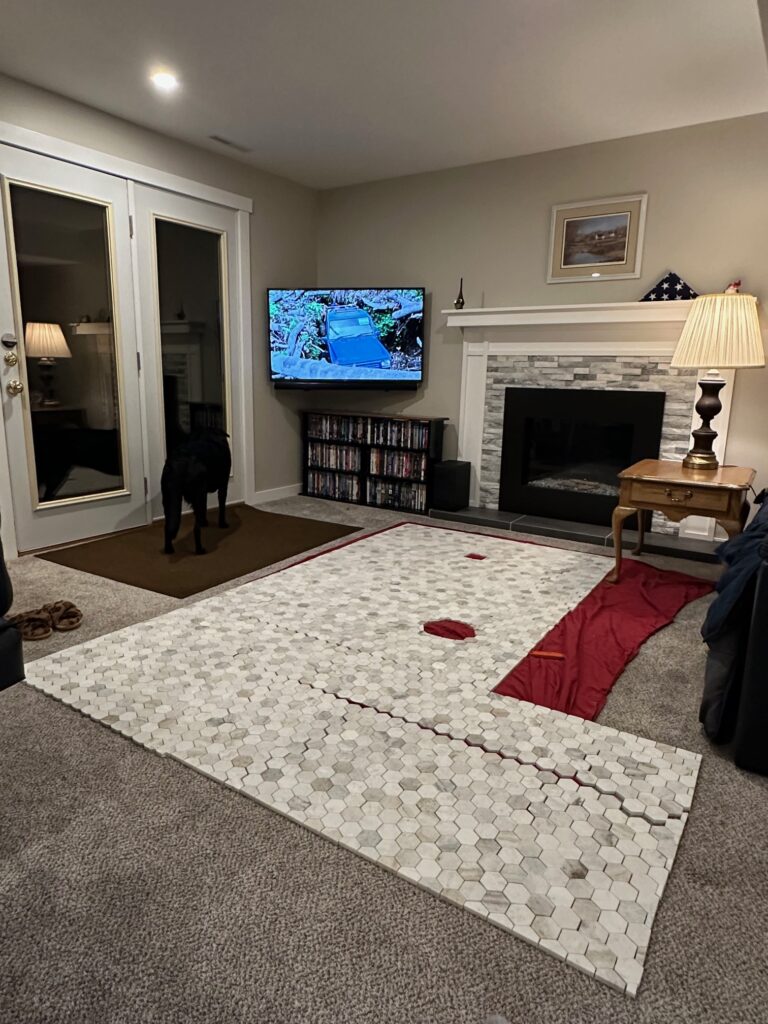
I cut the tiles and placed them in the bathroom, then carefully moved the tiles into the basement living room so I could remember where they all went.
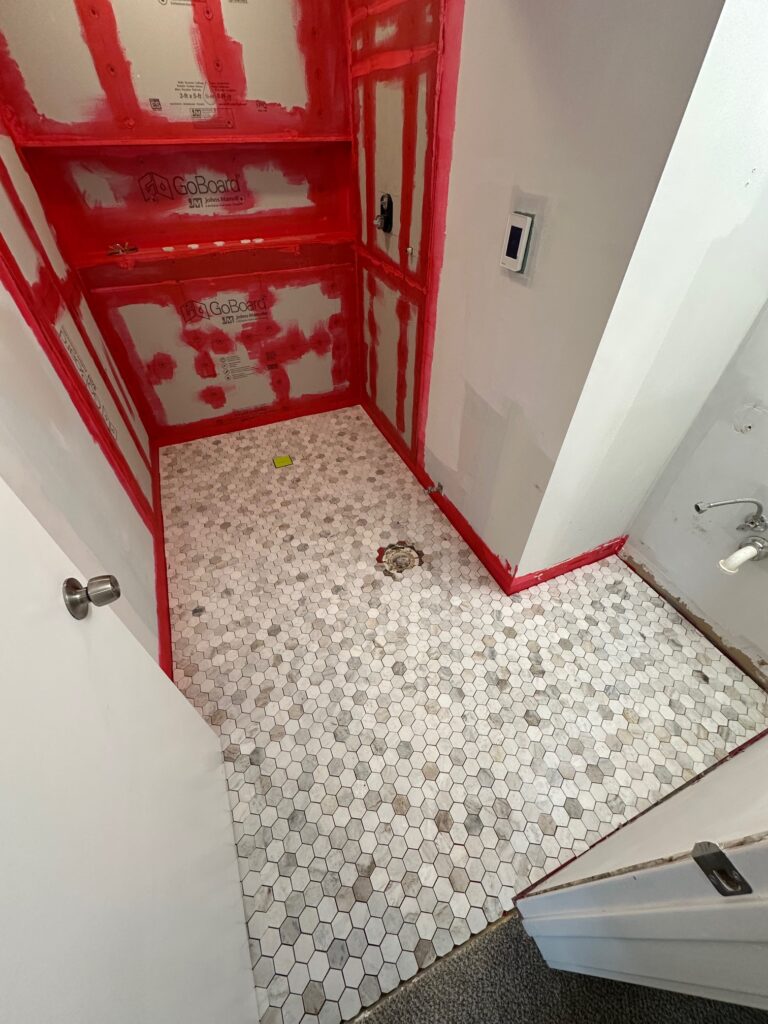

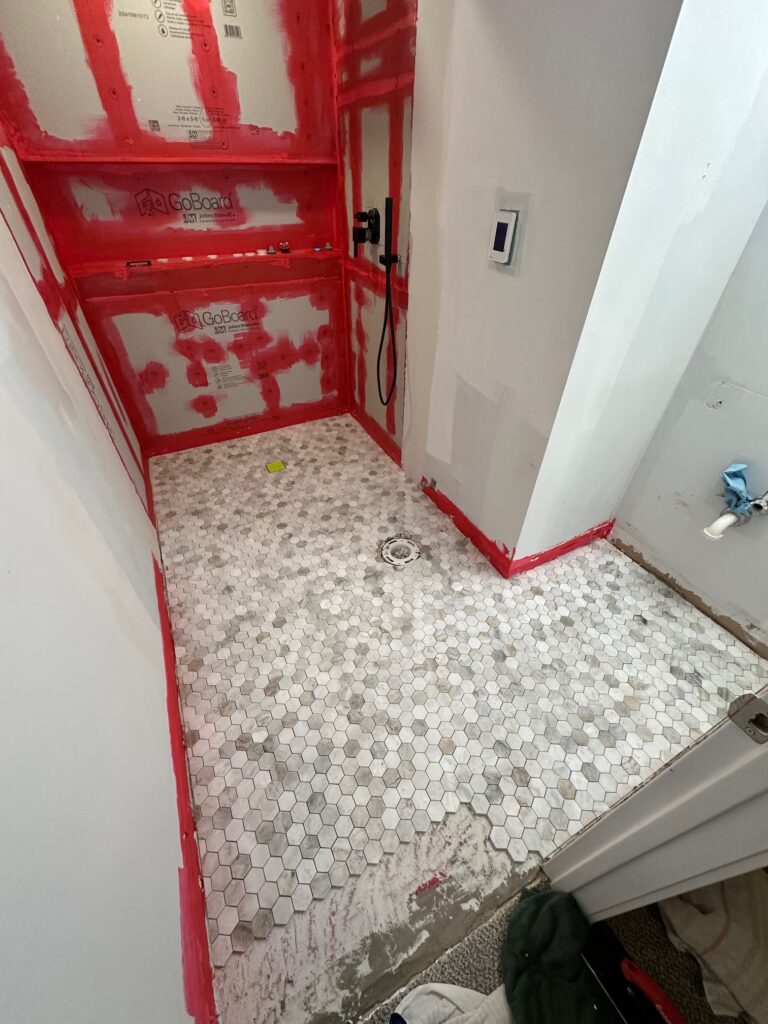
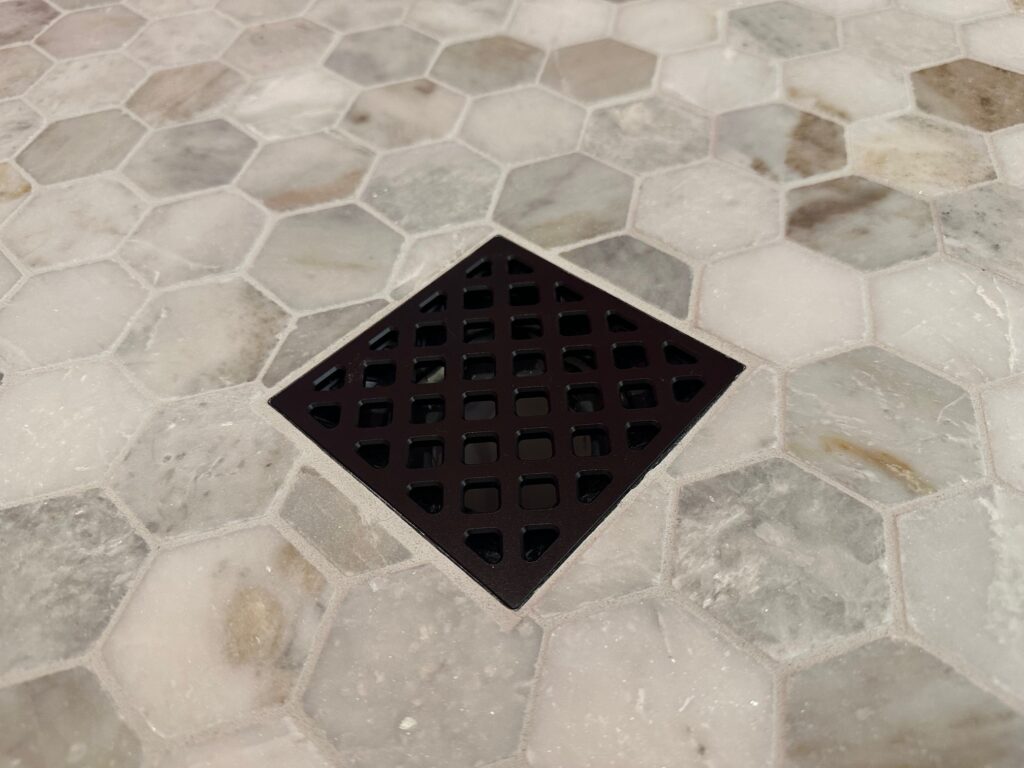
Next, I grouted the floor. Several days later, I applied Sealer’s Choice Gold to protect the tiles and grout from staining. Here’s how the “Frost” grout looked around the FloFX drain grate.
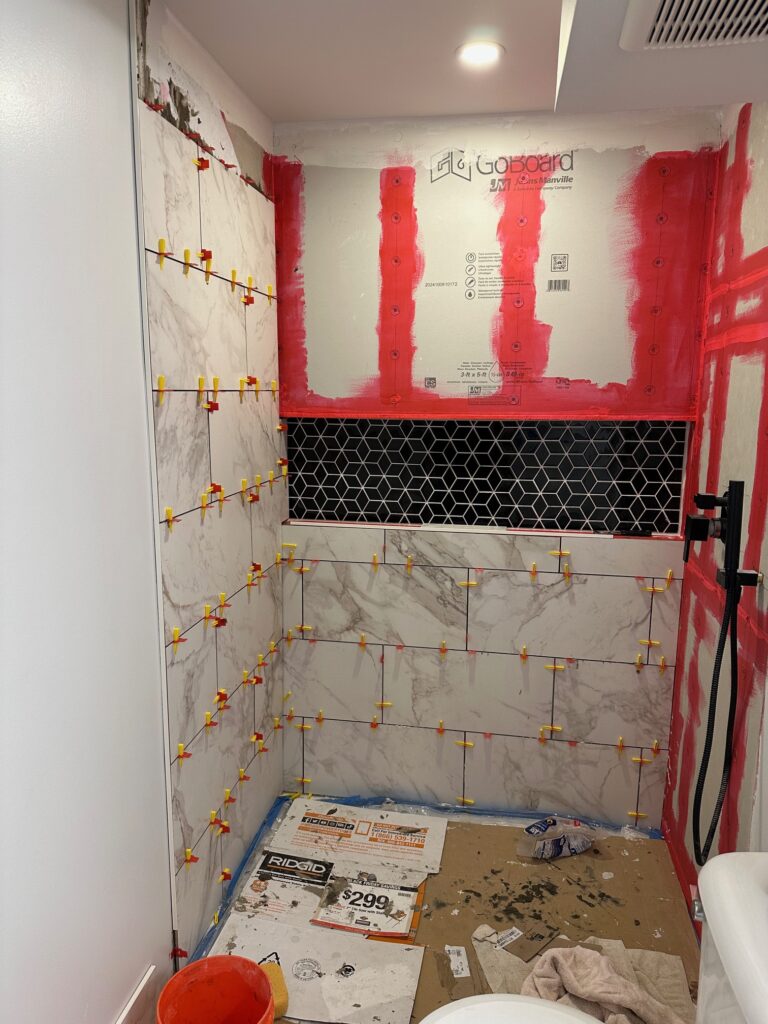
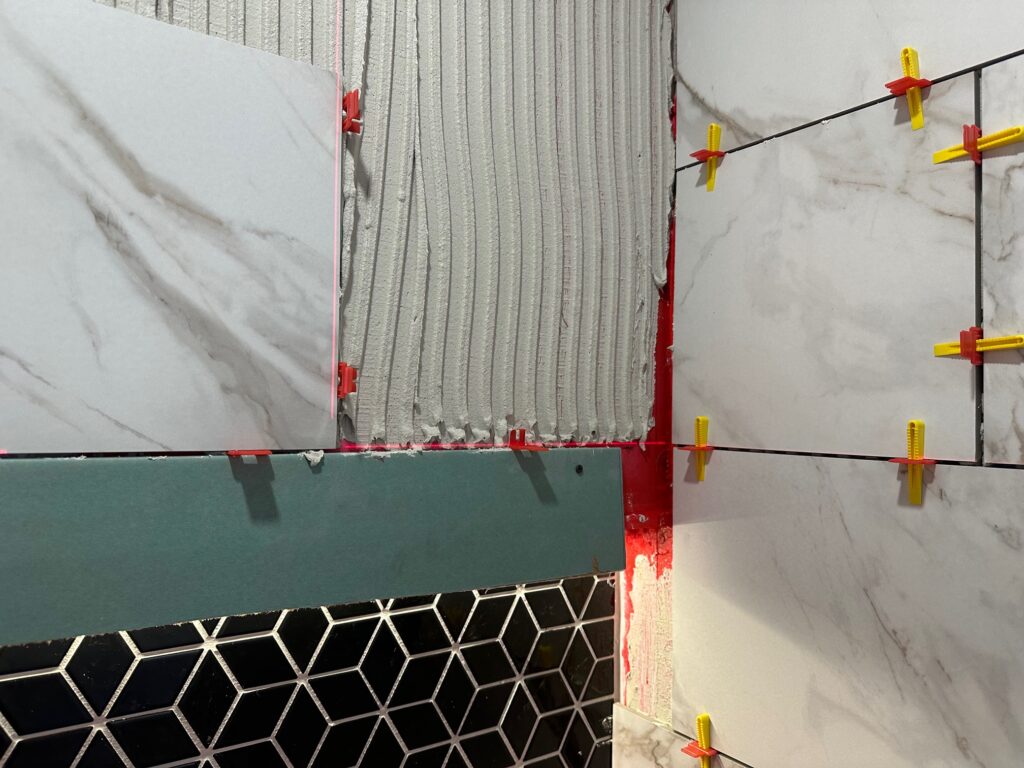
I’d never used locking tile spacers before but wanted these large-format tiles to look as good as possible. I used a little over 200 QEP LASH Tile Leveling Clips. They were very easy to use and made a big difference.
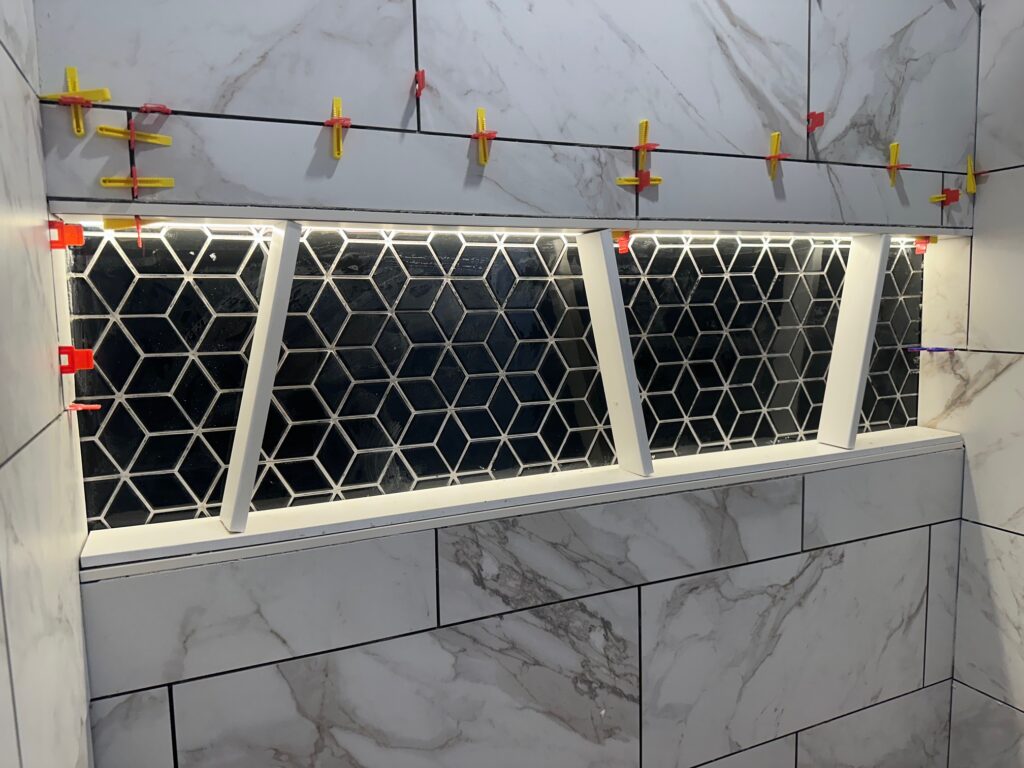
Around this same time, I installed the ambient LED strip to the top of the shower niche. The Nicho Series LED system, which I picked up from the website Wired4Signs, is designed to be used in showers. The light has a color temp of 3000K and requires a 24V driver. I hooked it up to a motion detected switch, so it turns on when someone walks into the room.
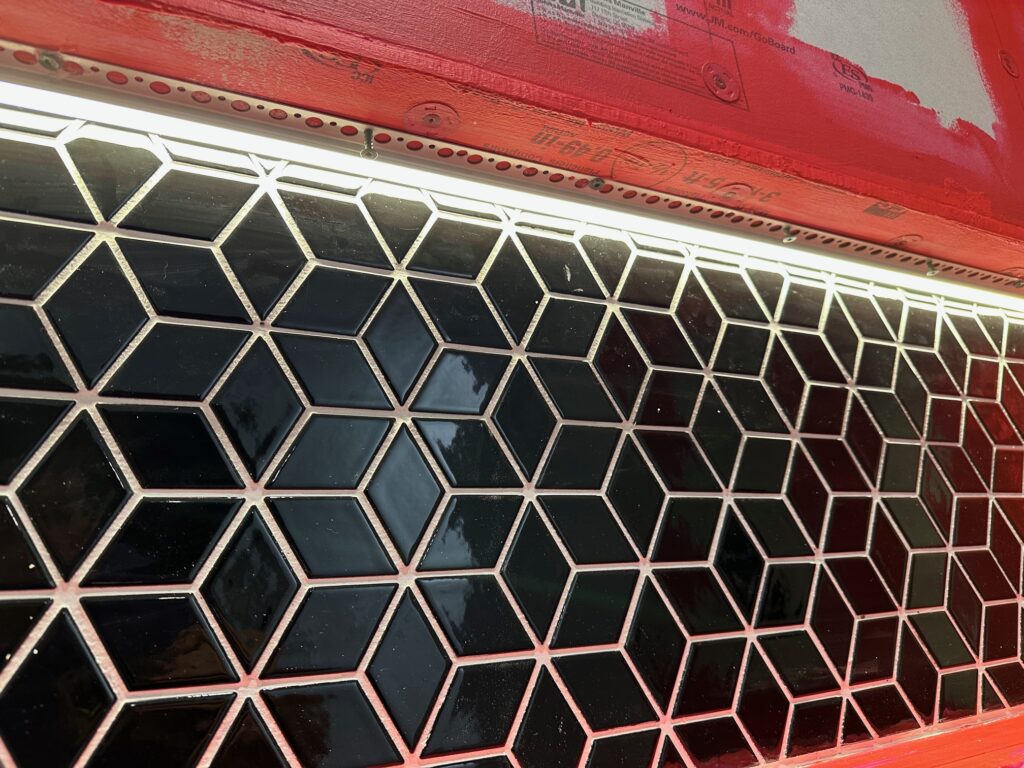
With the lights installed, I finished the shower tiles. Exposed edges, including the niche and baseboard tiles, got some special treatment with Schluter JOLLY. We went with A100 in white. It was easy enough to cut with my angle grinder and smooth out with a metal file.
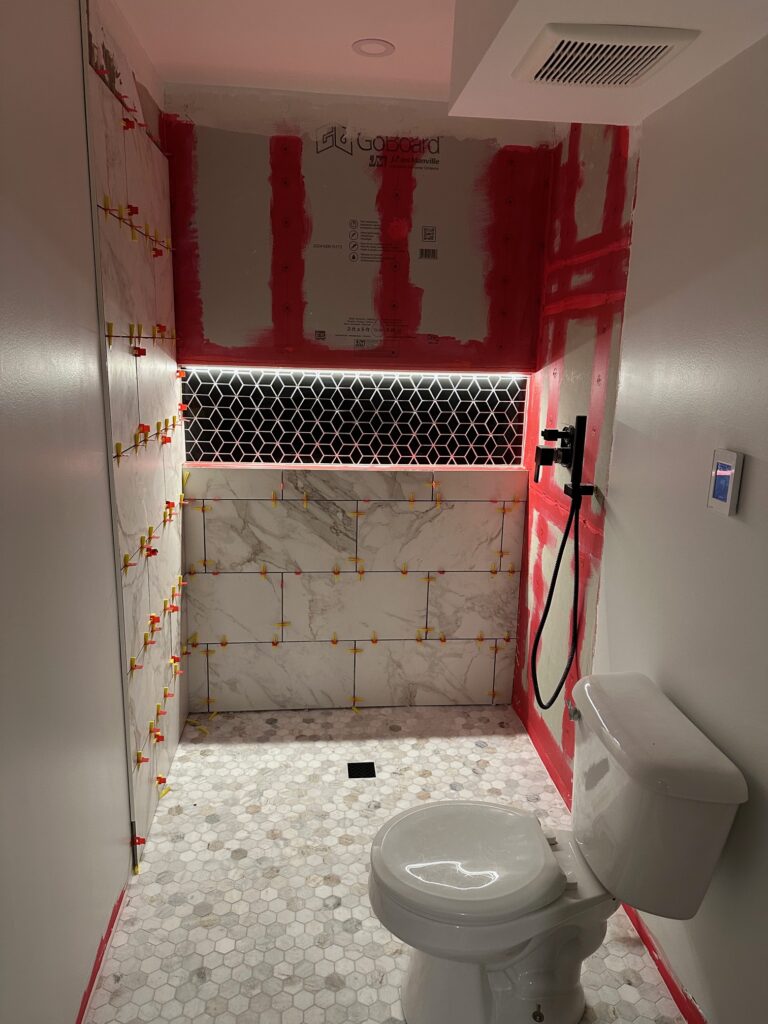

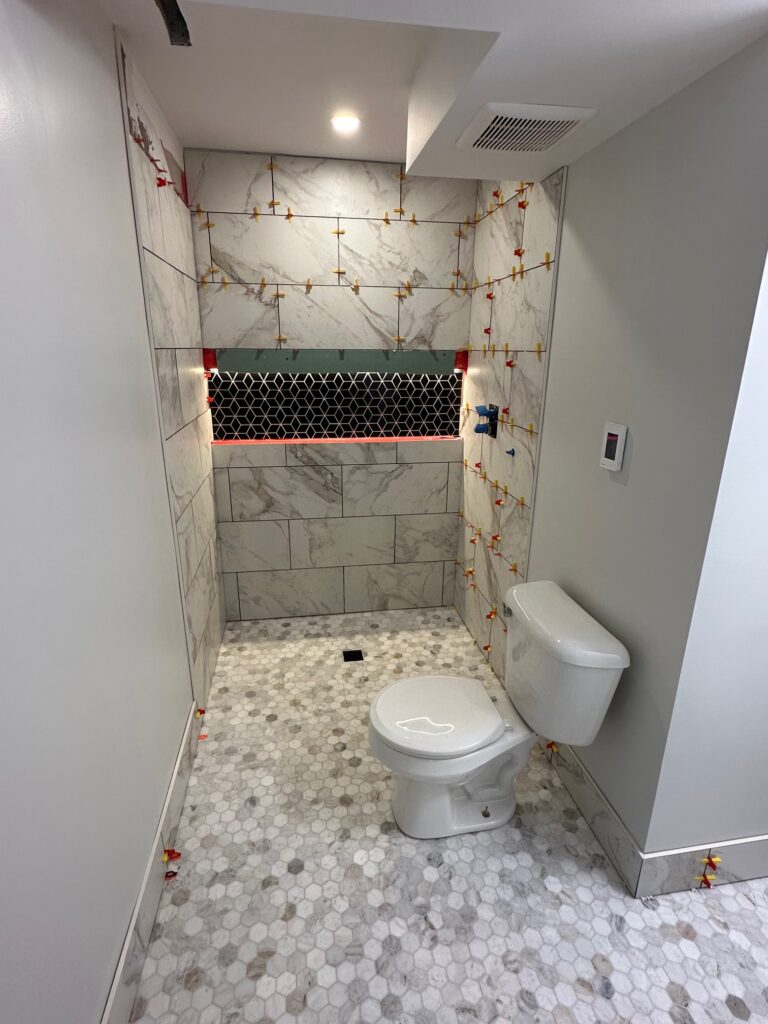
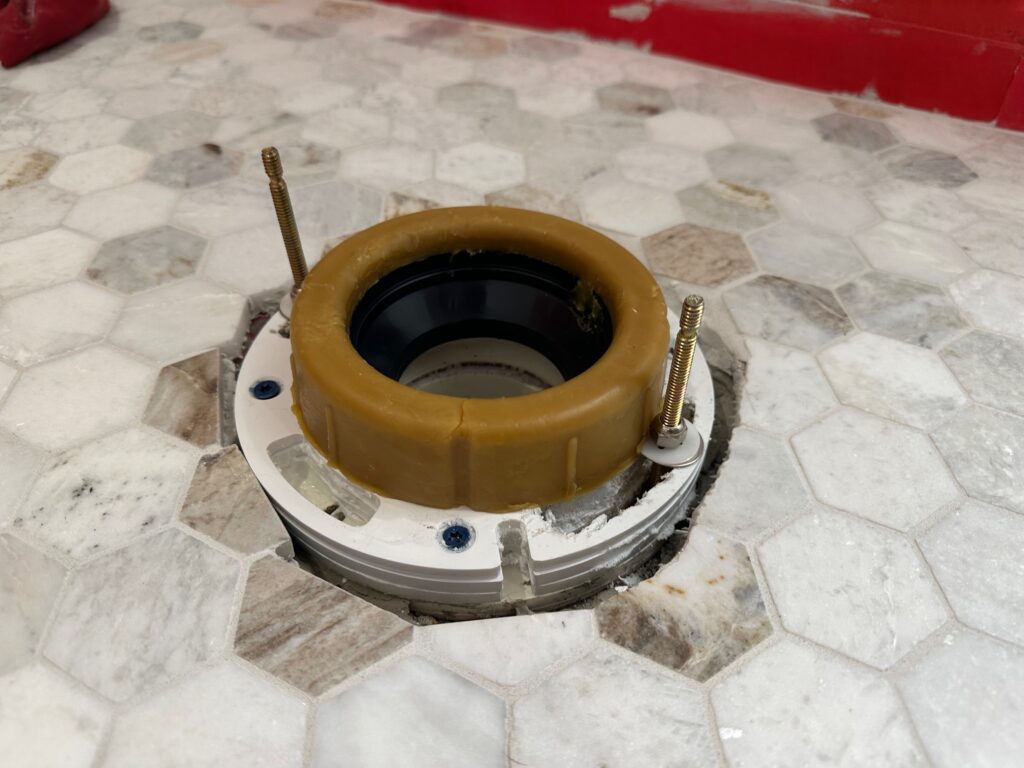
The toilet took a little more work than previous projects because we installed a heated floor. While I accomodated for this height difference in the shower by lowering the foundation, the rest of the room ended up 3/4″ higher than it was before. Installing a toilet meant using toilet flange spacers.
Here’s what the shower looked like with grout:
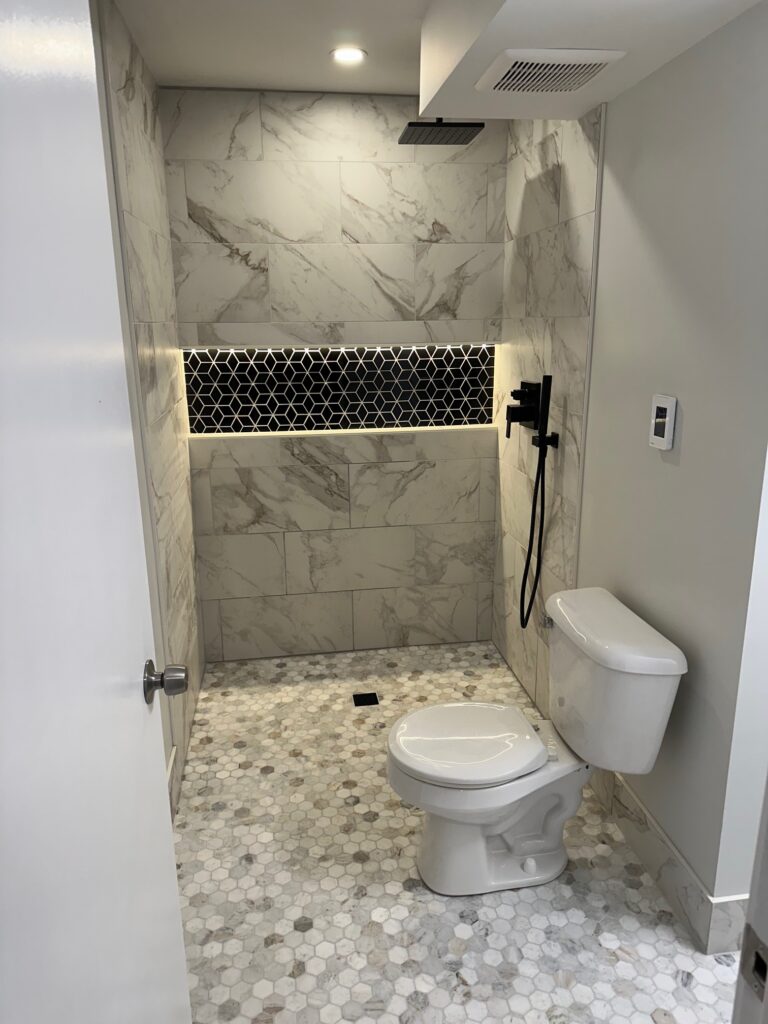
With the tiles installed, the only work that remained was finding a shower door and vanity sink. We’re very happy with how the tiles look!
Thanks for reading!
-Mike